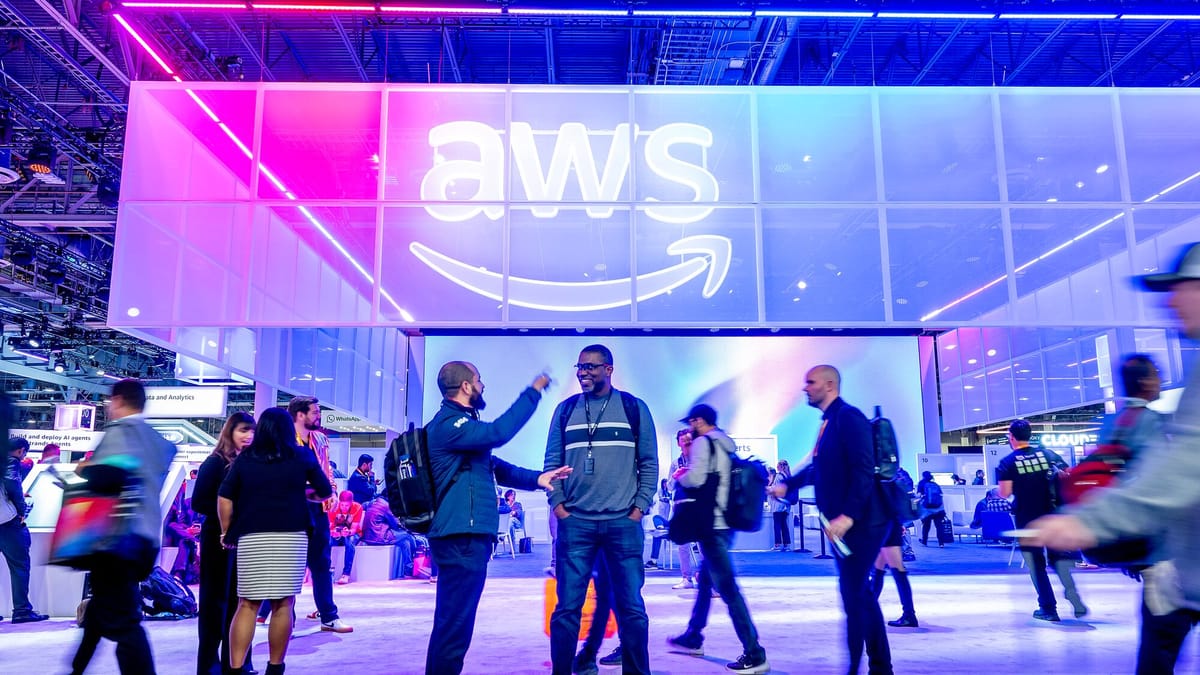
As I reflect on the recent AWS 2025 event held in Las Vegas, two things stuck in my mind, writes Don Schuerman, CTO, Pega.
First, we have entered the “mass confusion” stage of the AI hype cycle. Everyone is talking about AI and agents, but most companies sound indistinguishable from one another, with the widespread integration of AI and generative intelligence, alongside the rise of autonomous AI agents, dominating the event.
If the AI bubble ever starts to deflate, footage of this exhibition floor would feature prominently in a Netflix documentary about it. Every vendor I saw had “agents” and “agentic” tools and was going to help organisations “unlock the power of AI” – but at that surface level, everyone started to look the same.
Second, software companies are finally starting to realise that there is no future for AI expansion at the enterprise without predictability and guardrails baked in. Almost every discussion placed as much emphasis on governance, monitoring, and control as on innovation itself, and repeatedly positioned predictability, security, and risk management as the conditions that ultimately make growth possible and AI pilots successful.
New agents and agent tracking
The launch of frontier agents, announced at the event, could well be the next step in the agentic journey and it's encouraging to see big names such as the Commonwealth Bank of Australia utilising these and seeing a positive impact.
Setting them apart from previous AWS offerings, Frontier agents can work for hours or even days at a time on a task. They can operate in repeatable and consistent ways if they have access to a catalog of approved processes and workflows. We’ve been thinking a lot about how to create this catalog of workflows – we call it an “agentic process fabric” – so agents can act as extensions of teams, and truly free up time for humans to focus on more complex, nuanced tasks.
The introduction of AI agent observability and decision transparency will also help teams ensure compliance and ultimately build confidence in the AI tools being used across any given team, as they will have a 360-degree view of what's happening and can test workflows before going live.
AI agents are becoming more commonplace across businesses but there are ongoing concerns about black-box approaches – understanding how they make decisions is more critical than ever.
We’ve had success at Pega building our own agents on top of both AWS Bedrock and our own workflows – both introducing the power of agents, but also ensuring they make predictable and auditable decisions.
We’ve also built our own internal AI agent called intern Iris which was a real-world experiment to test the development and deployment of intelligent agents within an enterprise environment. Iris is helping us understand, execute, and optimise complex workflows.
Nova Forge
The launch of Nova Forge and the ability to inject owned data into model training through "open training" were the other exciting developments at the expo.
By giving organisations the ability to incorporate their own proprietary data with Amazon Nova-curated datasets, enterprises now have other options to quickly fine-tune models for specific tasks. It offers a potentially more cost-effective way for businesses to build a LLM that truly understands their domain.
This blended approach is something we've been experimenting with, and it's encouraging that brands like Reddit are finding a clear use for it to help with their moderation needs.
I'm keen to see how many teams will foot the hefty annual bill to create their very own "Novellas," particularly as the $100,000 cost doesn't include any dedicated help from Amazon's engineers, so the process will need to be both user and potentially beginner friendly. Some of the more advanced AI deployments launched at the event also come with a large price tag for annual and usage-based costs, meaning as we’ve seen up to now, it’s easier for organisations with bigger budgets to invest and experiment, and could prove a barrier to entry for smaller teams.
Transform welcome for legacy migrations
It was also great to hear about the added capabilities of AWS Transform, including the introduction of AI agents which will help companies modernise their code and applications, as technical debt is an ongoing hindrance for businesses seeking to undergo proper transformation.
I’m particularly interested in how the new AWS Marketplace ability to support Composable Offerings, which blend assets from ISVs and system integrators into an easy-to-consume solution, will help accelerate this transformation and move away from legacy technology and applications.
App modernisation projects are complex and often require both AWS cloud services, specific ISV capabilities and the knowledge and experience of a systems integrator.
We recently launched composable solutions with Capgemini and Accenture, which use Pega Blueprint together with partner tooling and AWS agentic AI to rapidly analyse, redesign, and modernise legacy systems, and I expect to see these play a bigger role now they can be accessed via AWS Marketplace.
The link has been copied!
Your link has expired. Please request a new one.
Your link has expired. Please request a new one.
Your link has expired. Please request a new one.
Great! You've successfully signed up.
Great! You've successfully signed up.
Welcome back! You've successfully signed in.
Success! You now have access to additional content.