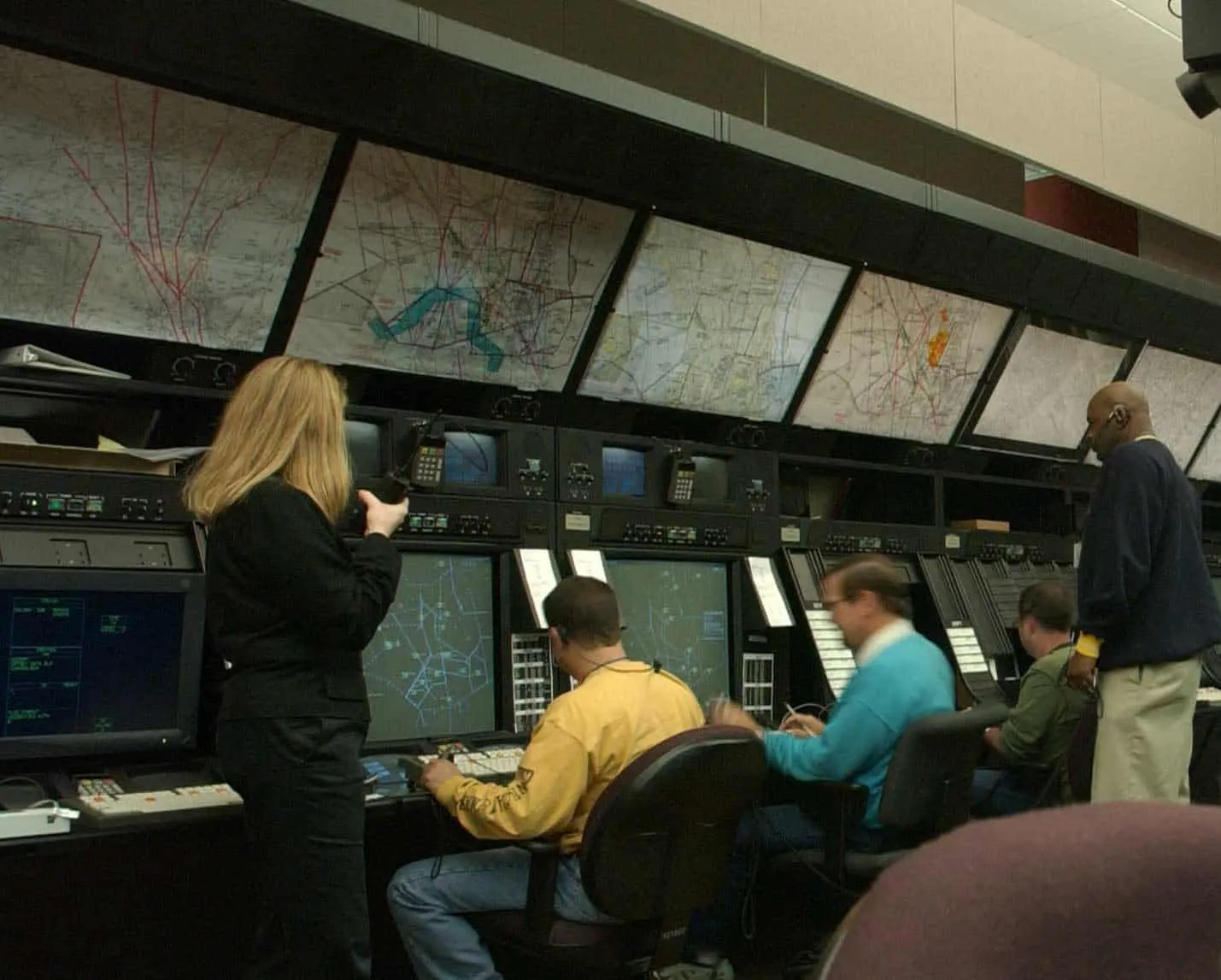

The Federal Aviation Administration (FAA) has blamed instability in its “legacy TDM system” for the grounding of flights nationwide on Friday 13 November.
TDM is short for time-division multiplexing – a network type associated with ageing telecommunications infrastructure, of which the FAA still has no shortage.
(As of May 2026 the FAA was still running over 2,600 ageing copper telecommunications cables across its radars, voice systems, and flight data communications – and working to transition nearly 30,000 services from legacy network protocols, like x25, to Internet Protocol (IP), an audit in September showed.)
Over 12,462 flights, including 9,082 by major airlines, were cancelled due to the incident with disruption (and finger-pointing ) continuing over the weekend.
The FAA published an FAQ on Sunday 15 November sharing its findings.
Router of the problem
FAA acting CTO Rebecca Guy earlier told reporters: “When we started to see the occurrence where our network was having instability, we started to look at what was the cause. We saw two places that were actually pinging our network at a very high rate; 1,000 connections over every 4 to 5 seconds,” she added – causing much chatter about how this modest level of requests could take down flights nationwide.
One widely shared speculative comment on the /IT sub-Reddit noted that the FAA “admitted to crossing Ethernet and TDM borders in their back network.”
“What probably happened is those TDM circuits were running pretty hot with existing data, and many locations maybe only had TDM circuits going into them. The introduction of [new AI airspace management platform] SMART didn't initially tip the circuits beyond capacity, but as more flights and information began to cross the network, and maybe combined with some configuration issues, then the whole network begins to topple. They probably broadcast that information to every ATC location to ensure every location has the same information, and everyone is effectively receiving the same data packets at the same rate. So now you've got a super-saturated network that is just discarding traffic as Air Traffic, Radio, and Weather data grows as the day goes on, causing the data integrity errors cited.”
The FAA said its network service provider L3 Harris, had been doing work at the El Dorado site, including deployment of a new router: “When these inconsistencies in the data happened, L3 Harris blocked those two locations and the network stabilized. The broadcasting function was also disabled on all the new routers as a precaution.”
Government Accountability Office (GAO) reports paint a picture of decades of mis-managed investment in national aviation technology, with weather and airport status systems still running on legacy OSs’ and floppy disc-powered systems, for example – noting in September that the FAA has not even “developed a comprehensive and well-documented lifecycle cost estimate for BNATCS” [brand new air traffic controls system.] [as the] program is not explicitly required to [have one.]”