Ericsson and Intel are “pooling” their leadership on 6G – as they chase progress on “the infrastructure that will distribute AI across devices.”
Blisteringly fast 6G networks will deliver real-time personal AI agents through smartglasses and XR or “extended reality” Ericsson believes.
This will require “a rising number of short, latency-sensitive control exchanges between devices and nearby edge or regional AI clusters.”
It will also create “strong pressure for local breakout to regional data centers close to large populations, so that personal [AI] agents do not incur transcontinental RTTs [round-trip time] it said in a February 2026 paper.
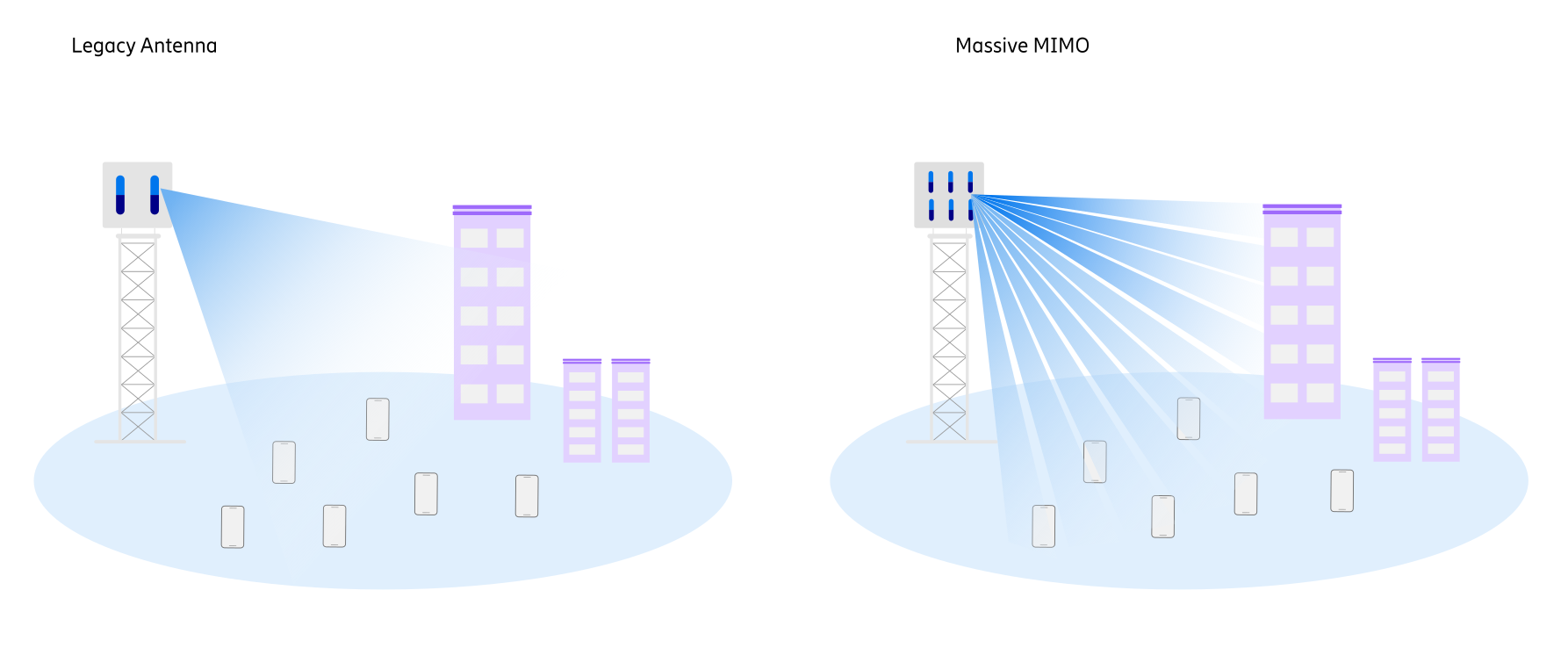
This environment will require widespread deployment of highly programmable networks with advanced “massive multiple-input multiple-output (MIMO), beamforming, and intent-driven, service-aware automation,” it added. (Essentially, masts that create multiple steerable and shapeable beams of radiowaves that are controlled by sophisticated algorithms to maximise coverage, capacity and rates.)
Sketching out other use cases like more “genAI apps, XR/AI glasses, AVs, drones/droids, and AI enabled industrial IoT” it added in that whitepaper that “sub-20 ms control-loop deadlines, and per-slice observability for SLA-grade outcomes,” will also be needed to deliver this at scale.
Intel and Ericsson’s 6G dreams
The partnership, announced at Mobile World Congress (MWC) in Barcelona, suggests a commitment by Ericsson to building chipsets for the next-gen network capabilities on “Intel’s most advanced process nodes.”
The two will be collaborating to create “future high-performance, and energy-efficient compute architectures designed for both AI for networks and Networks for AI,” they said in a detail-free March 2 press release.
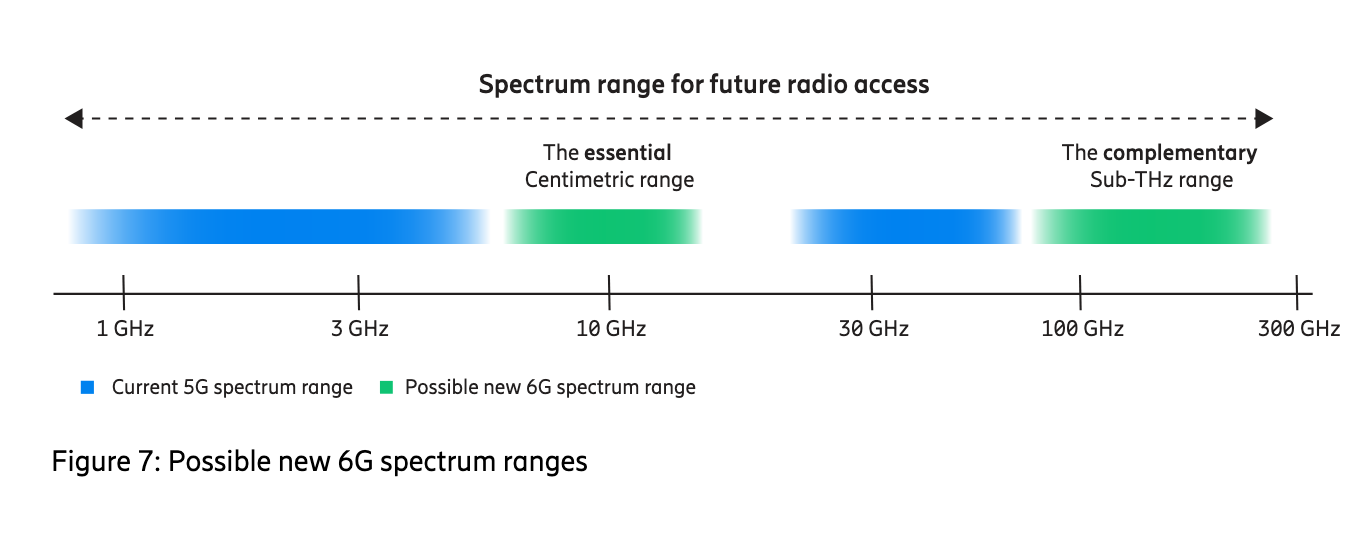
As well as AI workloads, 6G networks could power “holographic communication” and haptic “digital sensory experiences” Ericsson earlier claimed – saying capacity needs to be made available in the 7–15 GHz range to deliver this kind of capability. (By 2030, it suggested in 2024, users will be able to “experience all day XR, where the XR device would be used as a main device for all our communication, similar to today’s smartphone.”)
Telcos will need to be able to support far more sophisticated and dynamic network slicing than they currently can to deliver 6G meaningfully.
“Emerging requirements challenge existing slice management solutions, which were largely designed for 5G and rely on predefined templates, manual workflows, and limited feedback loops,” as a team from Accenture, Deloitte and several universities put it in a January 2026 pre-print paper.
They added: “A key limitation of current approaches is the fragmented treatment of slice lifecycle functions—orchestration, monitoring, and commercial considerations—are often handled by separate systems, resulting in delayed reactions to changing network conditions and inefficient resource utilization. In addition, the growing heterogeneity of 6G infrastructures spanning cloud, edge, radio access, and core networks makes manual or rule-based orchestration increasingly impractical…”
Lip-Bu Tan, CEO, Intel, concluded in a canned statement: “Intel’s ambition is to be the undisputed technology leader in unifying RAN, Core and edge AI to enable a seamless transition to AI-native 6G environments… With future Ericsson Silicon, powered by Intel’s most advanced process nodes, ongoing multi-year research plans, and flexible AI-RAN ready Cloud RAN powered by Intel Xeon, we are well on our way to delivering the future performance, efficiency, and supply security that the world’s leading operators require.”
The link has been copied!
Your link has expired. Please request a new one.
Your link has expired. Please request a new one.
Your link has expired. Please request a new one.
Great! You've successfully signed up.
Great! You've successfully signed up.
Welcome back! You've successfully signed in.
Success! You now have access to additional content.