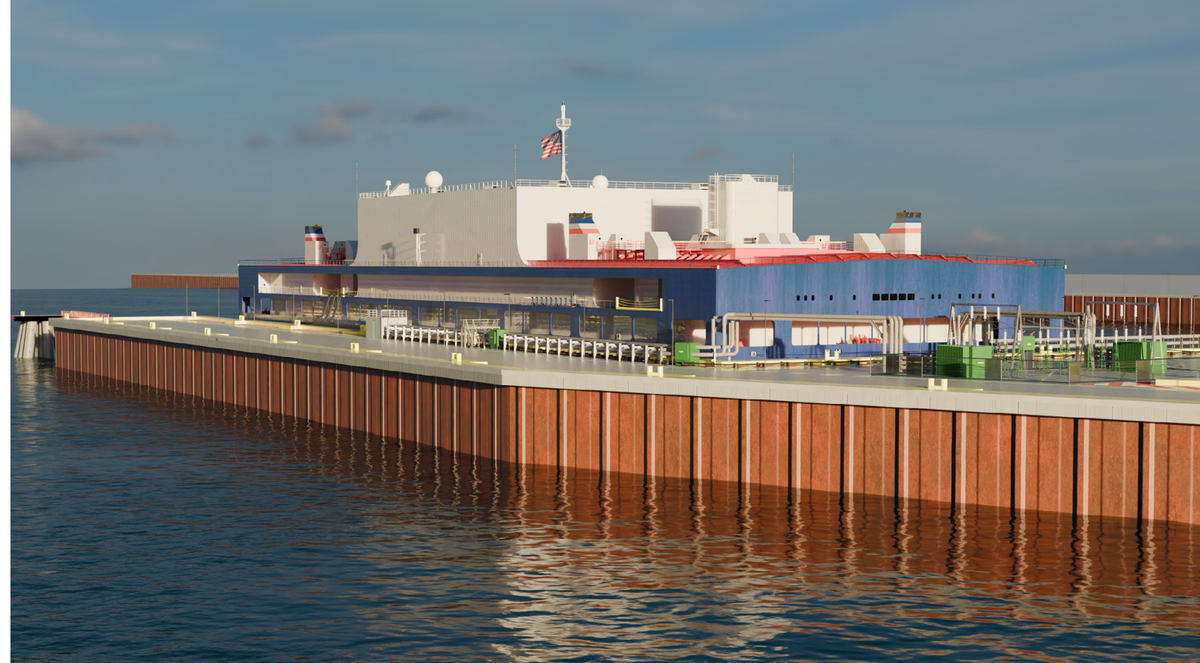
OpenAI has teamed up with South Korean shipbuilding firm Samsung Heavy Industries to explore building floating data centres.
A sweeping strategic partnership with the South Korean conglomerate will also see OpenAI tap Samsung Electronics for memory chips – with the AI firm predicting its demand will hit 900,000 DRAM wafers per month.
Samsung will also be joined by SK Hynix to produce memory for the global Stargate project, the two said in a letter of intent today. The two Korean companies make up the lion’s share of the global DRAM market.
Their US competitor Micron said DRAM supply was “very tight” in a Q4 FY25 earnings call late on Tuesday, September 23, with its entire 2026 supply of High-Bandwidth Memory (HBM) chips nearly sold out.
OpenAI has also made agreements with South Korean telco SK Telecom to build a physical data centre as the official “Stargate Korea.” (The Stargate project, led by OpenAI, Oracle and Softbank, has promised it will commit $500 billion for data centre and energy infrastructure builds.)
Is it a bird, no… it’s a floating data centre
OpenAI is in talks with Samsung’s construction and shipbuilding subsidiaries to build a different kind of data centre, however.
“Floating data centers… can address land scarcity, lower cooling costs and reduce carbon emissions,” the two said in their LOI.
They’re not alone in exploring this approach.
Japanese shipping company NYK Line, architecture firm NTT Facilities, MUFG Bank, and the city of Yokohama are planning a floating DC they said earlier this year. That will run off solar and batteries they claimed.
The Stockton floating DC in California has been operational since 2021.
The American Bureau of Shipping (ABS) and Herbert Engineering, proposed a nuclear-powered floating DC design in a June 2025 paper.
The link has been copied!