The CEO of semiconductor company Qualcomm said that AI will change how users interact with computers, suggesting agents could make the operating system irrelevant.
Speaking to the audience at Web Summit in Lisbon on Tuesday, Qualcomm’s chief exec Cristiano Amon shared his AI trend predictions for 2026.
One general area Amon was adamant about was how AI will change the way humans interact with computers.
“The OS is no longer going to be relevant in the way we think about OSs today,” Amon said. He suggested AI agents would supersede traditional UI and operating systems.
“The agent becomes the centre of the ecosystem, no longer the phone,” the CEO of a company known for produce mobile chips said.
Amon also suggested the shift in computer architecture would come with design overhauls, “Silicon is changing. Some of the chips that we do are changing in order to do this.”
Goodbye OS as we know it
Different enterprise AI solutions claim to be providing “agentic operating systems,” but Amon isn’t proposing a new platform to build or integrate agents into workflows.
The CEO predicts a radical change in how humans interact with technology.
Referencing how the mouse and graphical interface changed how people used computers, and smartphones turned programmes into applications, Amon said AI will create another revolution in UI.
Agents will replace phone and desktop operating systems that people use to navigate apps. “Every device that connects to the agent is a device that provides your mobile computing experience,” Amon said.
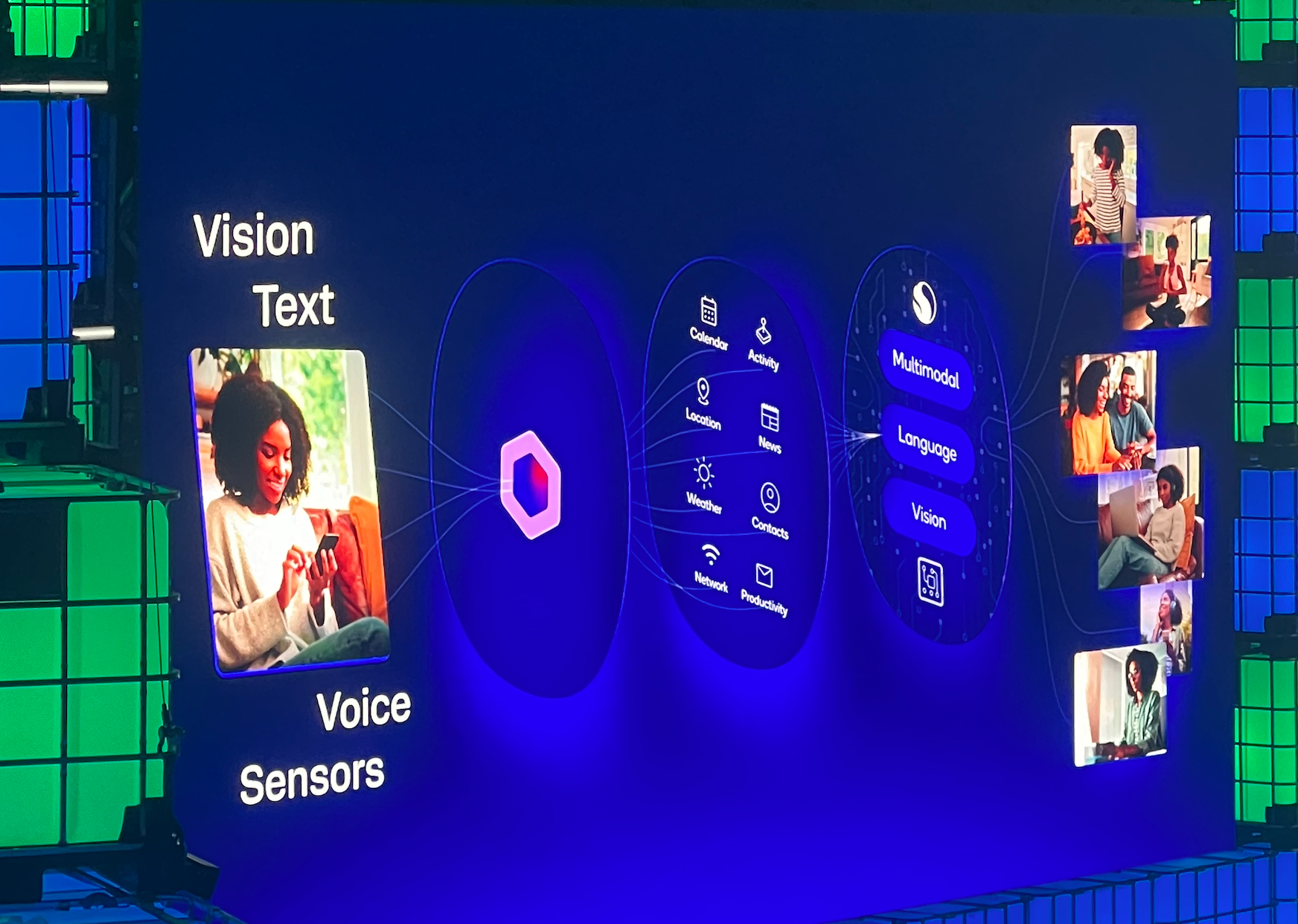
Slide Qualcomm CEO presented on agentic computer architecture.
Humans will feed inputs to an agent, which will take that data to agent-facing apps, and then multimodal AI models, before presenting the user with an outcome.
Amon said “You will [need OS] for the legacy use cases, but for the new use cases, you don't need an OS. You need an agent that interacts with you, and then once the agent understands your intentions, the agent will do the computation in the device or it goes, gonna go to the cloud.”
Amon also name dropped Elon Musk, describing a conversation he had with the SpaceX founder about the future of smartphones: “Just a big processor that runs AI with a display, a microphone and a speaker, and connectivity.”
AI on the edge
Amon has positioned Qualcomm as the perfect chip manufacturer to usher in this new era of AI on edge devices.
Qualcomm builds chips for PCs, smart glasses, and most notably the Snapdragon chip that powers Android phones. Amon, in a press briefing after the presentation, said that Qualcomm’s mobile experience means its well-versed in chips for “high density,” “low power” computing – which primed it to enter the AI race at the inference level.
“Coming from the phone space, we have to develop, as I've said, technology that deals with high density of computing, low power computing. Why not go into the data center? Especially at a time that the data center is changing from training to inference.”
Amon said that even a small share of the data centre market could lead to “multiple billions of dollars for Qualcomm in the next few years.”
The link has been copied!
Your link has expired. Please request a new one.
Your link has expired. Please request a new one.
Your link has expired. Please request a new one.
Great! You've successfully signed up.
Great! You've successfully signed up.
Welcome back! You've successfully signed in.
Success! You now have access to additional content.