Updated extensively throughout at 22:30 BST, 25 June 2026, with comment from Openchip's CPO, details from the European Commission's Chips Act 2.0 proposal, and more detail.
Further updated 09:30 BST, 26 June 2026 with comment from SUSE.
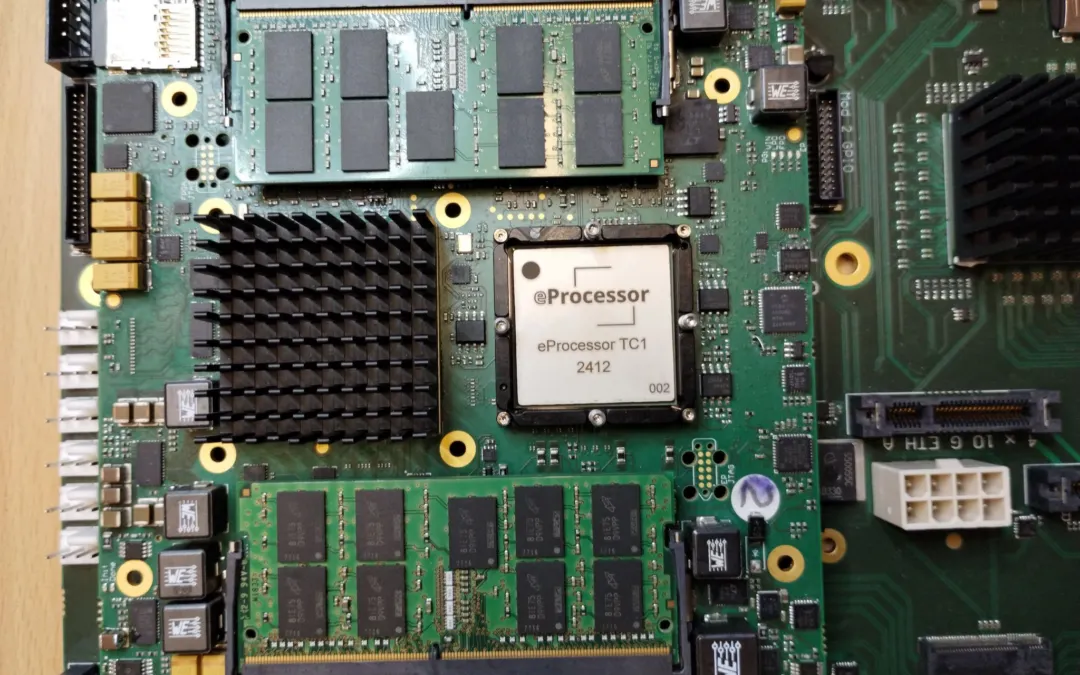
Enterprise Linux firm SUSE and Spanish chipmaker Openchip are teaming up to build what they say will be a “true EU sovereign” tech stack around the open-source RISC-V architecture.
Their partnership comes weeks after the European Commission said semiconductors “illustrate the urgency of Europe’s technological sovereignty challenge” and that the continent is vulnerable to “potential ‘weaponisation’ of supply chain dependencies.”
SUSE, which maintains a range of enterprise Linux, cloud-native and edge operating systems (OSs) and platforms, said the two will partner on refactoring SUSE software to run on the RISC-V instruction set architecture (ISA) – and Openchip’s semiconductors.
Under a memorandum of understanding (MoU) announced on June 25, the two will also collaborate to create a “sovereign” European AI inference stack that pairs their hardware and software using SUSE’s “AI Factory” – currently an Nvidia-centric set of architectural blueprints.
SUSE's Global Head Sovereign Solutions Andreas Prins told The Stack: "By optimising the hardware and software layers in tandem, the collaboration unlocks maximum performance for intensive AI and high-performance computing (HPC) workloads, especially leveraging native integrations such as the RVA23 profile and RVV vector instructions."
Openchip’s Chief Product Officer Robin Giller commented in a blog: “The work ahead, certification, roadmap alignment, joint customer pilots, is exactly the kind of unglamorous, foundational effort that determines whether sovereign infrastructure becomes a real deployment option or stays a policy aspiration.”