Super Micro has been dogged with persistent public issues for a long time – but has retained a large and growing enterprise customer base. The server and storage company reported $12.68 billion in revenue last quarter, as customers guzzled up its rack-scale systems amid rampant AI demand.
It survived Bloomberg’s still-contentious 2018 article claiming that Super Micro’s supply chain had been compromised by Chinese spies – who allegedly used their access to insert malicious chips at factories run by its manufacturing subcontractors in China; these, alleged Bloomberg, ended up in the data centres of Amazon and Apple among others. (All denied this.)
It survived 2020 SEC charges of "widespread accounting violations."
It also survived 2024 allegations of extensive sanctions evasion and accounting manipulation by short-seller Hindenburg Research – which alsoalleged that customers were moving away from Super Micro owing to undisclosed firmware issues and poor aftercare. Those allegations resulted in the company delaying publication of its annual report and promising new financial controls – it vehemently denied any sanctions breaches.
But now in a bombshell indictment the US Department of Justice has alleged that the company’s co-founder (who is an SVP and member of its board of directors) was personally involved in a “brazen” plan to ship $2.5 billion in sanctioned AI hardware to China, including NVIDIA GPUs.
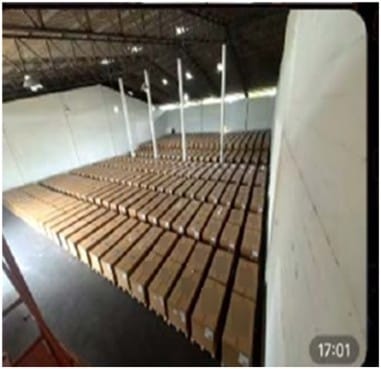
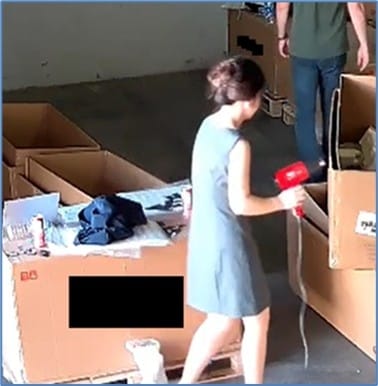
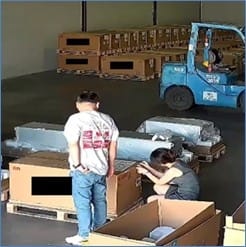
Dummy Super Micro servers and server box repackaging caught on CCTV. Credit: DoJ
Super Micro co-founder Yih-Shyan“Wally” Liaw, a US citizen, was among three individuals arrested late Thursday, including a Taiwan-based staff member. (Super Micro the company is not named as a defendant.)
Liaw is a member of Super Micro’s board of directors and controls $464 million worth of Super Micro shares, according to FactSet. He works as an SVP of business development. Also arrested were Ruei-Tsang “Steven” Chang, and Ting-Wei “Willy” Sun; a Super Micro sales manager in Taiwan, and a contractor respectively. The company has placed the employees on leave and ended its relationship with the contractor.
An indictment and investigation by the FBI says that three indicted defendants staged thousands of “dummy” servers (“non-working, physical replicas” of its servers for inspection) having actually re-boxed the hardware and shipped it to China. Photographs shared by the DoJ show staff using a hairdryer to remove labels from server boxes.
“Throughout the scheme, the defendants coordinated closely with each other, executives of Company-1 [a south-east Asia-based company], and third-party brokers with end customers in China using encrypted messaging applications… to conceal the nature of the scheme from the U.S. Manufacturer’s compliance team, U.S. authorities, and others.” - DOJ
U.S. Attorney Jay Clayton for the Southern District of New York said: “Diversion schemes like those disrupted today generate billions of dollars in ill-gotten gains and pose a direct threat to U.S. national security. [We] will continue to doggedly investigate these illegal diversion schemes to bring to justice bad actors who aim to profit from illegally exporting U.S. artificial intelligence technology…"
FBI Assistant Director James C. Barnacle added in a DoJ press release: “[The defendants] allegedly fabricated documents, staged bogus equipment to pass audit inventories, and used a pass-through company to conceal their misconduct and true clientele list.
“The conduct by these individuals alleged in the indictment is a contravention of the Company’s policies and compliance controls, including efforts to circumvent applicable export control laws and regulations,” Super Micro responded.“Supermicro maintains a robust compliance program and is committed to full adherence to all applicable U.S. export and re-export control laws and regulations.”
Liaw, 71, of Fremont, California; Chang, 53, of Taiwan; and Sun, 44, of Taiwan, are each charged with one count of conspiring to violate the Export Controls Reform Act, which carries a maximum term of imprisonment of 20 years, one count of conspiring to smuggle goods from the United States, which carries a maximum term of imprisonment of 5 years, and one count of conspiring to defraud the United States, which carries a maximum term of imprisonment of 5 years.
Sign up for The Stack
Interviews, insight, intelligence, and exclusive events for digital leaders.
No spam. Unsubscribe anytime.
The link has been copied!
Your link has expired. Please request a new one.
Your link has expired. Please request a new one.
Your link has expired. Please request a new one.
Great! You've successfully signed up.
Great! You've successfully signed up.
Welcome back! You've successfully signed in.
Success! You now have access to additional content.