

Nearly every large organisation has paid for a software change it expected to make things worse, according to a striking new survey of enterprise IT chiefs.
Research commissioned by software-support firm Origina and run by Censuswide polled 2,018 senior information technology decision-makers in the US and UK.
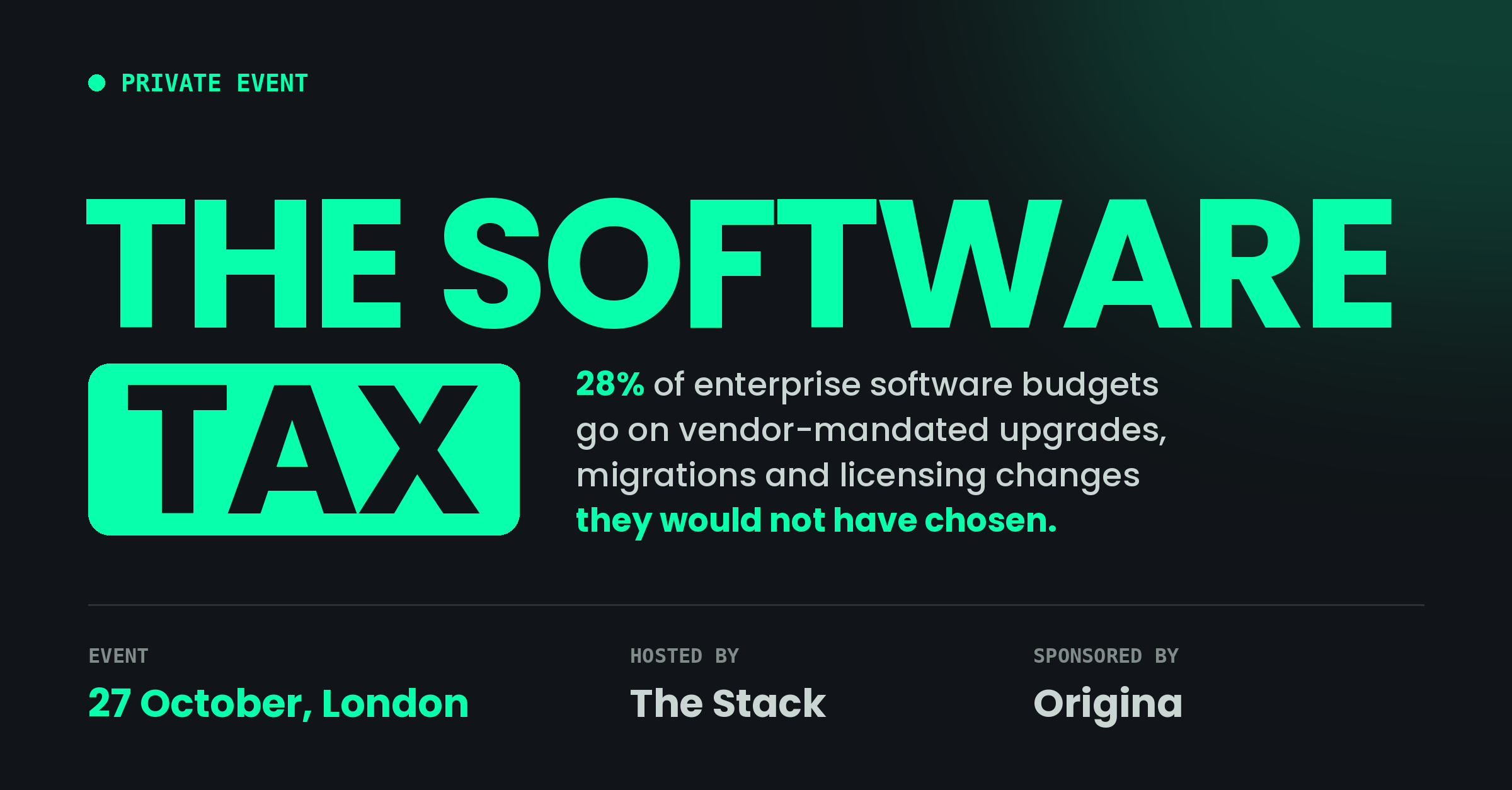
They found that, on average, 28% of software budgets go to changes the organisation would not have voluntarily opted for. The latest change, on average, cost respondents $12.87 million. Some 78% said their vendor set the timing and terms of change.
Origina CEO Tomás O’Leary and Boston University economist Marshall Van Alstyne, who authored the final report, published today, call this the “Software Tax.”
"The market has left some of the most experienced technology leaders in the world with little room to refuse, and that cost shows up in budgets, in engineering time and in innovation that never gets funded. We want to make that cost visible." Origina CEO O’Leary
Among the 74 firms spending $50 million or more a year, the last mandated change averaged $27.04 million, though the authors caution that the sample size is modest.
The authors blame lock-in: customers choose freely at purchase, but after embedding a system, leaving becomes prohibitively costly. Saying “yes” can be rational even when the upgrade is unwelcome and expensive. The hidden costs may be larger.
Innovation budgets take the biggest hit, and 84% say senior engineers often maintain vendor-mandated change rather than build new capability. Some 34% say these costs majorly contributed to slowing or cancelling an AI programme.
Nine in ten have scrapped working hardware to meet a vendor deadline.
As the report asks: "How... do we distinguish between the legitimate costs of maintaining enterprise software and those that result from an imbalance of power? One useful test is to ask who primarily benefits from the change, and whether the vendor’s proposed solution is proportionate to the underlying need."
The authors urged buyers to negotiate exit terms up front, favour modular systems, keep credible alternatives and band together. Some 91% would back tenant-style legal protections. An obvious caveat. Origina, the sponsor of the research, sells third-party software support, so it has a commercial interest in the findings.
The Stack is co-hosting a private dinner for technology leaders with Origina about this issue. Chatham House rule. October 27, central London, 6pm onwards.
Just 7 seats left.
Register your interest in attending here.