Web3 created this music business, genAI may define it
Why this trombone playing CEO is bullish anew on NFTs - and overlooked artists.

Why this trombone playing CEO is bullish anew on NFTs - and overlooked artists.
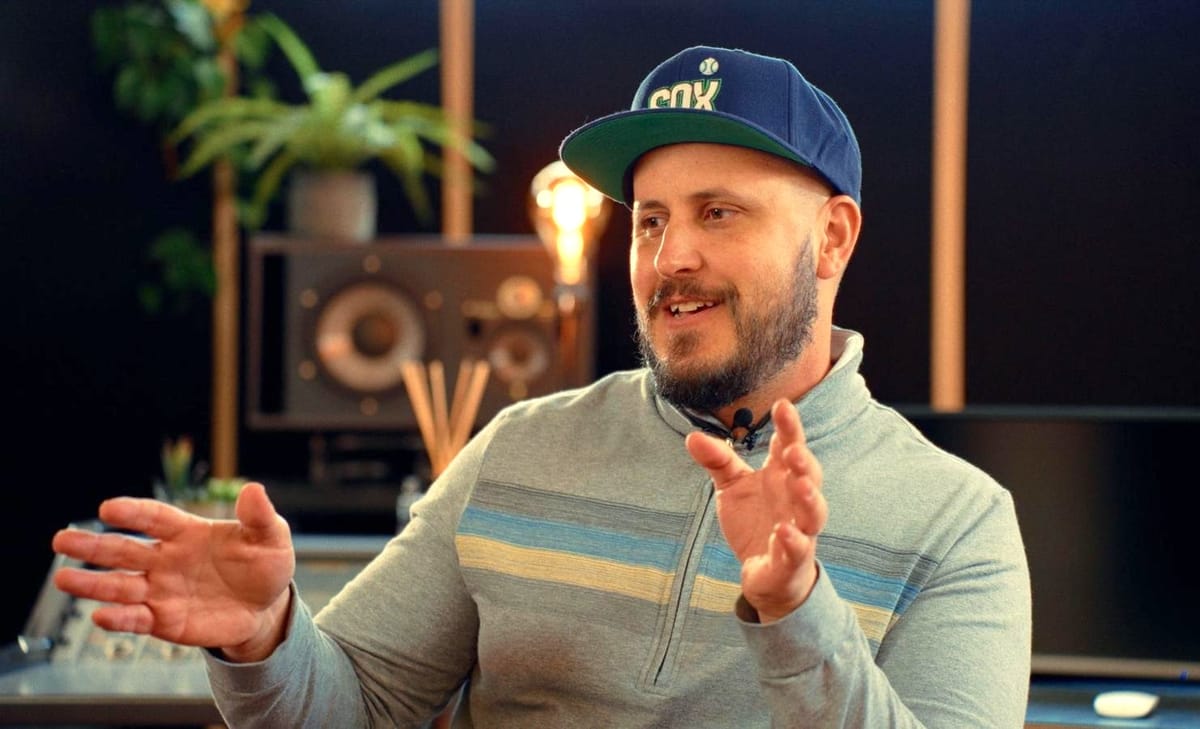
Unchained Music has a use for NFTs: to attach indisputable metadata to songs, in case of copyright or royalty disputes.
It's not exactly the way NFT enthusiasts thought it would play out but it is a business-friendly solution to a pernicious problem. There is no central repository of music. Musicians change distributors or move to new publishers, data is lost, and money goes astray. Unimpeachable proof that requires no central authority can come in handy.
Even if it does not make anyone vast amounts of money.
"It is amazing to have this extremely hyped, mega-money consumer-facing technology you end up using as a back-office legal protection system," says Unchained CEO Matt Waters. "We'll see if it comes back [as a high-value consumer good]. If it does, great. If it doesn't, we've found something that we can utilise for immutable ledgers."
Unchained was named for the Web3 ecosystem that it hoped could transform the music industry. Half a decade later, parts of that revolution – such as big-money NFTs – have faltered. But Unchained has found uses for some of the approaches and technologies that came with Web3 and, though the music industry is slow to turn, it thinks things such as blockchain adoption to increase the velocity of money is going in the right direction.
Now, it faces the genAI revolution, and that is a whole new game. For the music industry, and perhaps for Unchained, it holds far greater peril than Web3 did. Whether it holds promise is yet to be seen, because right now it is more about defending against this new technology.
Even if you are a nimble player that was founded on the promise that new technology can transform the sector.
Waters was an American trombone player in China when he co-founded Unchained at a time when capital was to be had if you could provide a decent theory for how Web3 could be applied. The company has had more than 100,000 signups since, and expects to be cash-positive soon.
The users came to get their music published on Spotify, Apple Music, and just about any other platform you can imagine, for something close to free. Unchained was in it to aggregate the royalties from a lot of independent musicians very efficiently, so it could generate yield that pays for the system.
"Fantastic, right?" says Waters. "The problem is, recently, the music industry has significantly changed."
From Unchained's perspective, what it refers to as the "democratisation" of music production is possibly a boon, seeing that it has built a system to democratise distribution. Except the primary problem for all involved – consumers, creators, distributors, and platforms – is now discovery in a noisy environment.
Spotify may have on the order of an average of a million songs uploaded per week this year. The vast majority of that music will never be listened to. The platforms have every incentive to prevent the deluge from overwhelming their end users, regardless of the quality of the music.
"We started out with this idea to make music distribution truly free," says Waters. "Now we've realised that even if we push back against the music-streaming platforms, tell them 'there's value in this music', we're not going to win."
The solution? Help artists be heard. Unchained seeks out those who want to create a sustainable career or hobby, and helps them take the initial step, the "zero to 10" part of the trajectory.
"10 to 100, you have support for, and 100 to 10,000 you have support for," says Waters. "But you don't have support for the initial push."
That means efficiently creating, say, visual marketing materials – for which genAI is rather useful. It means new software systems that can be accelerated with vibe coding tools. As Unchained's model shifts towards enhancing the value of music with commercial promise, productivity tools are as attractive as in any other sphere.
Like much of the rest of the industry, though, it draws the line on the use of systems that generate music from scratch, unless those systems fall within the relatively small category of tools that have been certified as fairly trained and so, with any luck, are entirely immune to legal trouble down the line.
If the AI music copyright apocalypse comes (probably because book and news publishers create a legal precedent broad enough to apply to music), if one-button tools to create entire songs such Suno are held to owe almost every musician in the world money, it'll be nice to have NFT data to prove your music, or the music on your platform, pre-dates such tools – not least of all because you could get a share of the damages pie.
For the time being, it is not legally, financially, or reputationally safe to be distributing AI-generated music, says Waters. The industry must struggle with fundamental questions that didn't arise before, including whether it is a right to have your music distributed, or whether platforms must act as gatekeepers to protect their users, and face the inevitable recriminations and accusations that will come with that. But as a distributor, it starts with excluding some music from a service that was initially built to welcome anyone.
So, like almost everyone else, Unchained is trying to identify its industry's equivalent of genAI spam, even as fingerprinting and other techniques seem to be struggling.
Perhaps, though, it need not be about the use of AI as such, says Waters. Creators have to certify they aren't breaking the ToS rules (which include only using that specific subset of tools considered safe) but Unchained does not need a 100% detection rate in policing the use of AI at first submission.
Nor does it need to make a subjective judgement on quality, at least not at first.
You don't want to "walk up to an artist and say 'your baby is ugly'", says Waters. Instead, the first filter is for those who are "authentically trying", who are putting in genuine effort. That can be measured by the quality of the metadata the artists supply, by the quality of the cover art they submit, and by the quality of the sound recording.
Then Unchained checks for undeclared samples, and for AI use.
At some point in the funnel, though, "you have to put a human ear to everything," says Waters. So, like in many other places throughout the economy, cheap genAI on one side of the equation means expensive human labour is required on the other side.
Waters holds no grudge against AI as such; non-ML tools that make music production more accessible have been changing the landscape anyway, he says, and AI just amplifies the trend.
Even with all this going on, Unchained is still thinking in terms of Web3 and the still-unrealised possibilities it holds for the music industry.
There is a lot of "black box accounting" on royalties, says Waters, and artists can wait six months to receive royalties without knowing what is happening with the monetisation of what they create.
That meshes with the large amount of music being created in parts of the world where most people are unbanked, music that often does not make it to a global audience in part because the financial plumbing does not exist and so all involved lack incentive.
Therein, thinks Unchained, lies opportunity not dissimilar to what it can offer independent artists from the rich world that risk being drowned out by AI noise, and risks that are not entirely dissimilar either.
Music rights can be unclear in the developing world, says Waters, not because of AI creation but because of legal systems and commercial terms. Proving provenance and time of first publication can be key for both markets.
Likewise, using stablecoins to speed the flow of money through the music ecosystem can benefit every musician everywhere – but might not be to the benefit of those who earn interest on slow-moving money, no matter where in the world they are.
Solving those problems by implementing what is now ancient technology in internet years can change the industry for the better, Waters believes. Yet that is not what will define it.
"In the next ten years you are going to see a major shift in how things are monetised, and a lot of that is going to be based on how the industry responds to generative AI, how it responds to the massive amount of music being put up."
Interviews, insight, intelligence, and exclusive events for digital leaders.
No spam. Unsubscribe anytime.