

The UK’s tax authority, HMRC, has awarded AWS a £473 million ($633 million) contract to migrate from three data centres to the public cloud.
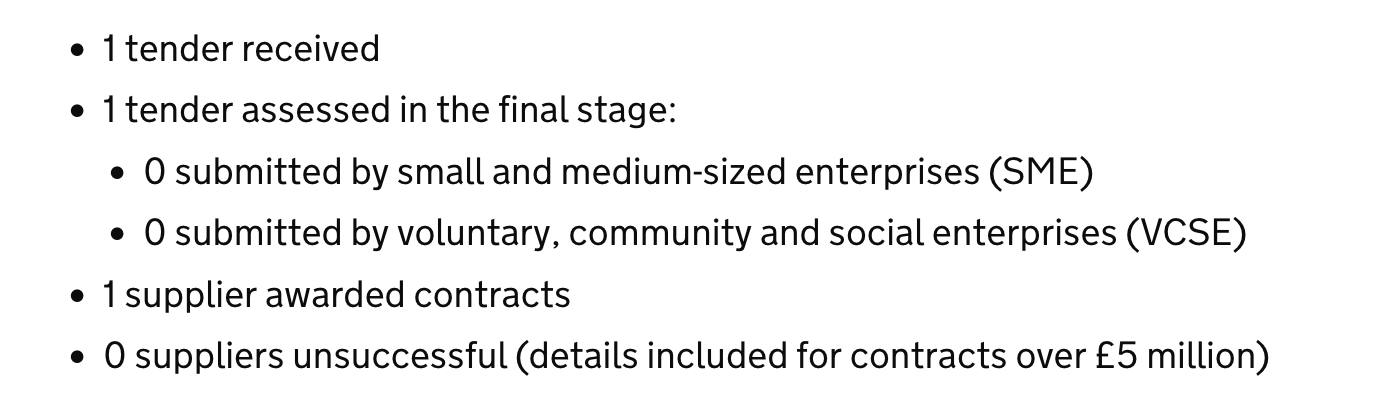
HMRC says not a single other company ultimately tendered for the huge piece of work – despite it being listed as a “competitive” procedure.
In June 2025 HMRC reportedly approached AWS, Google, IBM, Microsoft and Oracle to participate in the request for information (RFI) stage.
Computer Weekly in October suggested that Oracle and Microsoft swiftly withdrew, with Google and IBM later also voluntarily withdrawing.
Ultimately, only AWS tendered for the contract, a March 23 contract notice showed – a striking fact given how hotly contested the cloud market is.
The hyperscaler declined to comment and referred The Stack to HMRC.
Other cloud providers also declined to comment.
One senior government technology leader told The Stack: “It sounds like the rest of the market decided it was written to favour only AWS…”
Critics earlier slated HMRC for the “anti-competitive” wording in its March 2025 “planned procurement notice” which stated that:
The Authority is seeking to appoint a Hyperscaler to manage the migration of servers from the current on-premise solution to the Hyperscalers cloud environment. It is anticipated that the appointment will be limited to a single Hyperscaler, but this will be validated during the procurement.
The approach suggests early dismissal of myriad alternatives such as multi- or hybrid-cloud approaches that might involve smaller cloud providers.
9 key questions for HMRC
HMRC's procurement process has failed to generate competitive tension, which typically leads to poor commercial terms and increased long-term risk.
The fact that other hyperscalers seemingly withdrew, despite the healthy contract value, suggests the requirements were either overly prescriptive toward AWS's architecture or the risk-to-reward ratio was catastrophically skewed. Here's 10 questions The Stack would like answered.
1: Specification bias?
Given that four major hyperscalers voluntarily withdrew after the RFI stage, what specific technical or contractual requirements were identified as the 'deal-breakers' for them? How did HMRC ensure its requirements were truly outcome-based rather than written to mirror a proprietary service catalog?
2: Why only "hyperscalers"?
By explicitly and solely seeking a 'hyperscaler,' did it intentionally exclude highly capable other cloud providers or large-scale SI integrators who could have delivered a multi-cloud or hybrid solution? What was the objective 'scale' threshold that disqualified the rest of the market?
3: Best value assessments?
In a 'competition of one,' how did HMRC mathematically validate that it will be receiving 'best value' for the taxpayer? Without a secondary bid to benchmark against, what 'shadow bid' or independent cost model was used to ensure AWS’s pricing isn't inflated by the lack of competition?
4: Where's the exit?
This contract significantly increases the UK government's 'concentration risk' with a single US-based provider. What is HMRC's documented, costed exit strategy? If it needed to move these services swiftly due to a catastrophic price hike or service failure, how much would that 're-migration' cost, and is that risk reflected in the current business case?"
5: Data egress...
On similar lines... Given the massive volume of taxpayer data HMRC manages, what egress cost caps or waivers have been negotiated into this £473 million agreement? If a future government mandate requires HMRC to move petabytes of data to a sovereign UK provider or a different hyperscaler for resilience, what is the 'exit tax' under current AWS standard rates, and how does this contract mitigate that financial barrier to portability?
6: Modernisation vs hosting?
What percentage of this budget is allocated to actual refactoring versus simple infrastructure consumption? There is a lot of refactoring and modernisation to do of legacy systems. Has it war-gamed the challenges of migrating Solaris and AIX workloads for example?
7: Legal risk
Is it confident it can defend against potential legal challenges from the vendors who withdrew, and what is the reputational risk to HMRC if this was perceived as a 'done deal' before the tender was even published? We'd love answers on that!
8: Operational resilience
HMRC is a critical national infrastructure component. By consolidating so heavily on AWS, how is it protecting against a regional AWS outage? Does this contract include cross-region failovers that are independent of AWS's global control plane?
9: Social value and SMEs
Cabinet Office guidelines emphasise supporting SMEs and UK-based businesses. How does a £473 million, uncontested award to a US trillion-dollar entity satisfy the 'social value' requirements of the Public Services Act? What is the guaranteed 'trickle-down' to the UK tech ecosystem?
The contract will see AWS migrate an eclectic range of workloads (currently running on the likes of HP-Unix, IBM AIX, Sun Solaris, VMware ESXi, Windows, MWG-MLOS, NetApp ONTAP and other systems) off three Fujitsu data centres and onto its public cloud environments within two years.
HMRC says it wants the migration done and legacy hardware decommissioned by the time Fujitsu’s contract runs out in 2028.
The may expand to include “cloud native refactoring, containerisation” and “reengineering of migrated services” it said – as well as “data archiving and purging”. AWS will also provide “platform and service cost optimisation.”*
(*We all love marking our own homework… )
AWS will lead the “technical migration to the public cloud of services within the scope of the programme, and their hosting for the remaining life of the contract” HMRC’s contract award notice, published March 23, added.

Questioned how competitive a tender was, which only saw one cloud provider apply, HMRC told The Stack: “We follow government procurement rules when awarding contracts, ensuring value for money for taxpayers.”
Pressed on data sovereignty concerns and the risk of moving from lock-in with one provider to a decade with another, HMRC responded that data will be “hosted in line with UK government security standards, with safeguards in place to protect sovereignty and ensure we retain control of our data.”
“Exiting ageing data centres reduces technical debt and long‑term running costs”, a spokesperson said, adding “we continue to work with a wide range of technology partners rather than relying on a single provider.”
The contract comes after the UK's Treasury Select Committee questioned HMRC's reliance on AWS infrastructure – a 14-hour outage in AWS's US-EAST-1 region knocked some HMRC services offline in October 2025.
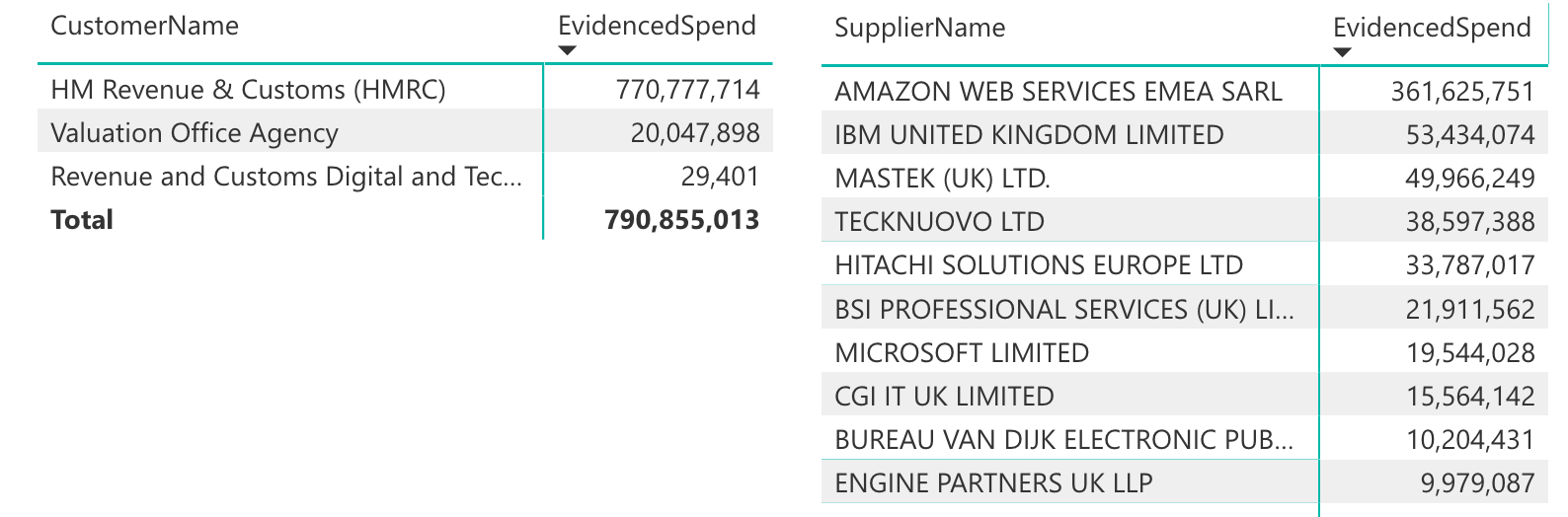
Government procurement data shows that AWS is by a huge margin HMRC’s preferred existing cloud provider. Under the G-Cloud procurement framework alone, over the past five years, AWS has landed £362 million, dwarfing second-place IBM at £53 million.
A HMRC spokesperson had not responded to a further request for comment confirming it approached other providers, as The Stack published.
"Serious questions"
Mark Boost, CEO of cloud provider Civo, told The Stack: “A £500 million ‘competitive’ tender with a single bidder isn’t really competition.
“It raises serious questions about how open it truly was.”
He added: “At this scale, concentrating critical infrastructure with one supplier creates real risks around resilience and flexibility, especially at a time when geopolitical tensions are rising and incidents affecting major cloud infrastructure are becoming more visible. This is exactly why multi-cloud strategies and supply chain diversification matter…”
Boost said the HMRC contract needed “far more scrutiny, both in how it was run and what it means going forward...”
The contract award comes after Parliament’s Science, Innovation and Technology Committee hit out at a “lack of joined-up government when it comes to digital government and digital government transformation.”
Grilling ministers earlier this month, MPs on the committee called for answers from HMG on who is leading “our digital and technology sovereignty, and responsibility [for it] across Government, such as it is…”
The UK’s Minister for Science, Innovation, Research and Nuclear, Lord Patrick Vallance sniffed: “I suggest you get the Digital Minister to come and answer this question, because that is their responsibility…”
We are still somewhat mystified by a) why everyone else pulled out and b) HMRC CIO's strategy here. If you want to shed light, discreetly and off-the-record, you can message your humble scribe on Signal on @Targett.11. (If you don't know how to hide your phone number, and just use a handle on Signal, you can learn how here.) Third-party comment by email is also fine.