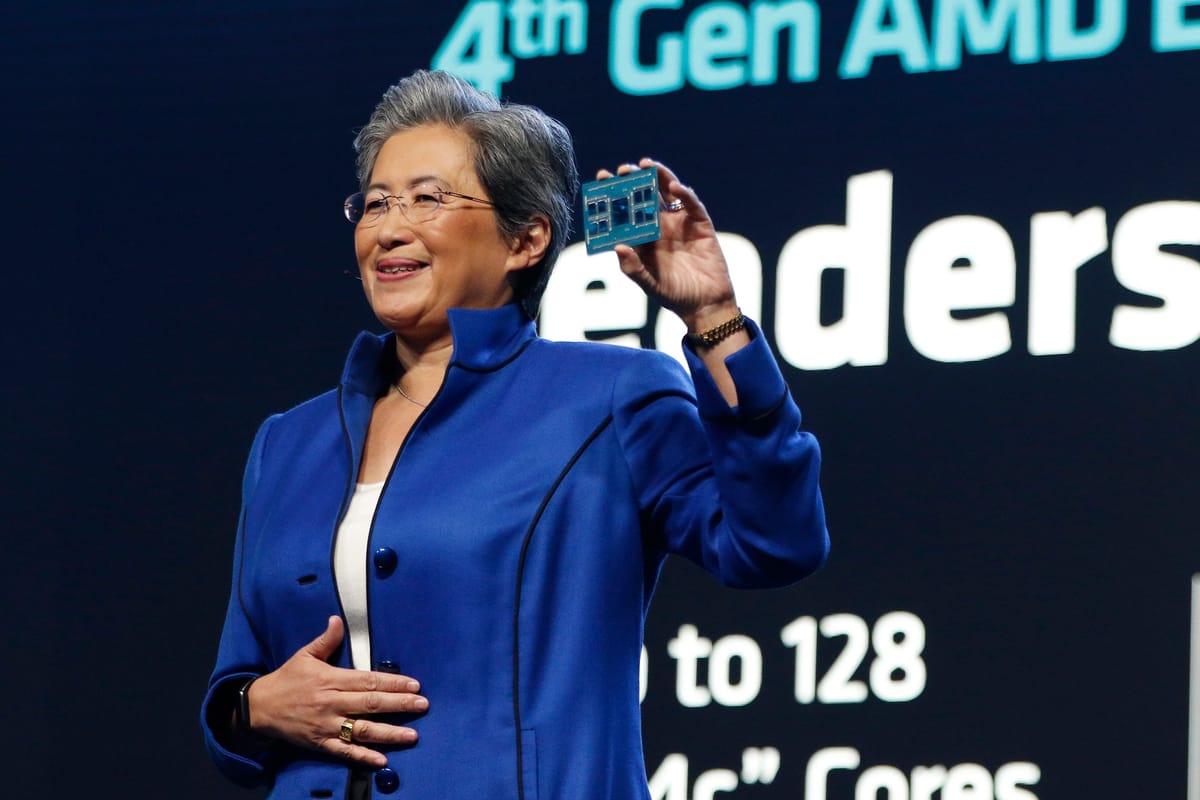
AMD will start shipping a custom version of its MI450 GPUs "optimized for Meta’s workloads" to Facebook's parent company in the second half of 2026, the companies announced on Tuesday.
In total, Meta could buy up to 6 gigawatts worth of Instinct-branded GPUs in a "multi-year, multi-generation collaboration" that Mark Zuckerberg linked to development of "personal superintelligence" in simultaneous statements.
Meta said the recent deal was part of its portfolio approach to silicon.
"By diversifying our partnerships and technology stack, we’re building a more resilient and flexible infrastructure. We’re combining hardware sourced from a range of partners with our own rapidly advancing Meta Training and Inference Accelerator (MTIA) silicon program," it said.
Exactly one week ago, Meta and NVIDIA announced "a multiyear, multigenerational strategic partnership" also in the name of building personal super intelligence.
The companies did not specify quantities, referring only to "millions" of Blackwell and Rubin GPUs, and the "potential for large-scale deployment" of NVIDIA Vera CPUs in 2027.
AMD shares too
As part of the deal, AMD said it has issued Meta with warrants for up to 160 million shares, equivalent to just about 10% of its equity.
The warrants mean that Meta could also benefit from any positive impact the deal has on AMD stock – subject to complicated terms.
The shares carry a nominal one-cent price but a complicated vesting procedure. Vesting starts after Meta has bought one gigawatt worth of chips and is "tied to AMD achieving certain stock price thresholds," as well as "Meta achieving key technical and commercial milestones," said AMD.
AMD said it would discuss the deal's terms in a call later in the day.
Meta said it will work with AMD for "alignment with our roadmaps across silicon, systems and software enabling vertical integration across our infrastructure stack."
Meta's deal with NVIDIA does not include any shares. With NVIDIA, Meta said it would co-design models for optimisation and acceleration, with no suggestion it would influence the NVIDIA hardware roadmap.
The link has been copied!