

Welcome to Runtime! Today on Product Saturday: Thinking Machines' first model could be an interesting test of enterprise demand for open-weight models, AWS extends its Security Hub service to cover Microsoft Azure, and more.
Please forward this email to a friend or colleague! If it was forwarded to you, sign up here to get Runtime for free every week, or level up here.
Open thoughts: It's been a little hard to tell what Thinking Machines, the $12 billion startup founded by ex-OpenAI executive Mira Murati, has been up to since blowing everyone's doors off with a $2 billion seed round. The company revealed a bit more of the full picture this week with the release of Inkling, its first AI model that will be available with open weights for enterprises to train against their own data.
"Inkling is not the strongest overall model available today, open or closed. Instead, a combination of qualities makes it a good open-weights base for customization: multimodal capabilities, efficient thinking, and availability on Tinker [Thinking Machines' API] for fine-tuning," the company said in a blog post. It also said that Inkling will be the first in a series of models that could test enterprise demand for open-weight models, which appears to be getting traction after the second-quarter token bills arrived.
Up to code: Product designers and software developers generally sit on different sides of your typical IT organization, but AI coding agents are reducing the distance between them at a rapid pace. This week Canva launched Code 2.0, a new tool that lets customers turn their design ideas into websites with prompts or drag-and-drop elements.
The new version of Canva Code was designed to ensure "the whole loop, from idea, to approval, to a website or app that your audience can engage with, happens in one place for everyone, including those who’ve never coded before," the company said in a blog post. Customers can also bring projects started in other AI code assistants into Canva for design tweaks.
GRC's reputation is shifting, and GRC Engineering is at the forefront. Join Ayoub Fandi, GRC Engineer at Lovable, and Justin Pagano, Sr. Director of GRC Engineering at Vanta, to discuss Legacy GRC and what comes next. You’ll learn practical ways to start automating, with lessons from Lovable and Vanta.
Azure thing: There was once a time at AWS where the mere mention of words like "multicloud" and "Microsoft Azure" could get you actually kicked off the expo hall floor at its annual re:Invent conference, but that was then and this is now. This week the cloud infrastructure leader introduced two new features to its Security Hub service that take the company "in two directions our customers asked for most," it said in a blog post.
Security Hub now offers protection against threats to AI workloads through two new enhancements to its iGuardDuty service and a new inventory tool that helps companies understand the types of AI workloads running on their network. It can also now check for problems or issues with workloads running in Microsoft Azure, given that customers "have run in more than one cloud for years, and they have been clear with us that they want Security Hub to also cover the rest of their estate," AWS said, implying that Google Cloud support is around the corner.
Castles made of sand: Sandboxing — confining an application to a secure area so any problems won't take down your whole deal — is a widely used technique in software development, and as companies start to build and deploy AI agents, sandboxing them is crucial. This week Perplexity announced its own take on a sandbox for AI agents called SPACE, which is designed to be used with the company's Computer agent-building platform.
"SPACE spins up ephemeral sandboxes which only live as long as they’re needed for running code, interacting with files, or other tasks," the company said in a blog post. For longer-running tasks, which is where agents could really fulfill their potential, "SPACE wraps each sandbox in a session that can be paused, resumed, or branched into multiple sandboxes,"
Proximity mines in the basement: OpenAI's hardware division will likely be tangled up for years after Apple sued it last week for stealing trade secrets, but this week it released a new product that is about as far away from Apple's design aesthetic as it gets. The Codex Micro keypad resembles a video-game controller/keypad that developers running agents through Codex can use to control their activity.
"Flick the joystick to launch common Codex workflows like reviewing a PR, debugging an error, or refactoring code," or use shortcut keys to accept or reject proposed changes, OpenAI said on the product page for the new device, which was designed in conjunction with Work Louder. If you're already blowing $100 a month on ChatGPT's Pro plan, why not drop another $230 on a keypad?
Join peers following The Stack on LinkedIn
They just work here: After a security researcher tried and failed to get Cursor to acknowledge a bug in the Windows version of its coding agent that could allow a complete takeover, the company told The Stack Thursday that the bug was "out of scope" for its bug bounty program and it has no plans to fix it. Cursor did suggest that users of its Workplace Trust feature, which is free but turned off by default, could protect against that type of attack.
 Noah Bovenizer
Analyze this: Different types of companies need different types of data analytics products to make sure they are measuring the right signals that affect their business, but setting up custom data analytics pipelines with traditional vendors can get expensive. Open-source software has become a big part of how companies get around those costs, and DataFusion is a fast-growing SQL query engine that makes it much easier to set up those systems.
 Kiera Fields
Sticker shock: Some AWS customers woke up to a number in their billing dashboards that raised alarm bells to say the least. Thanks to a bug in its global AWS Billing Console, one bill seen by The Stack showed an amount due of over $1 quadrillion, another showed over $400 trillion. AWS said the root cause was an issue with unit pricing within the estimated billing computation subsystem.
 Edward Targett
Let the chips flow: TSMC isn't worried about the AI boom coming to an end any time soon. It said this week that it would increase capital expenditures this year to between $60 billion and $64 billion, and CEO CC Wei told analysts that "the emergence of agentic AI is leading to a resurgence in the role of CPUs in AI data centers, which drives more silicon demand in addition to AI accelerators."
 Noah Bovenizer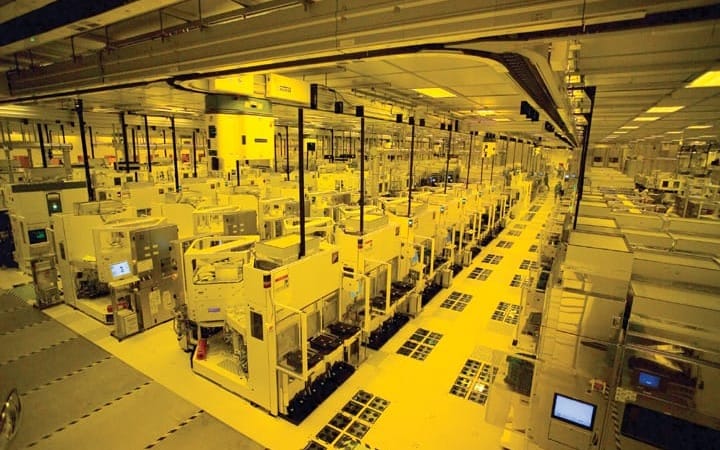
Want to sponsor a newsletter and get in front of 30,000+ subscribers, including CTOs and CIOs wielding $150 billion in annual tech budget? Get in touch through our Partner page.