
Welcome to Runtime! Today: Lloyd's COO Ron van Kemeade explains how LLMs are helping refactor mainframe apps, the UK's plan to deal with the data-center deluge, and N-Central admins need to get patching.
Please forward this email to a friend or colleague! If it was forwarded to you, sign up here to get Runtime for free every week, or level up here.
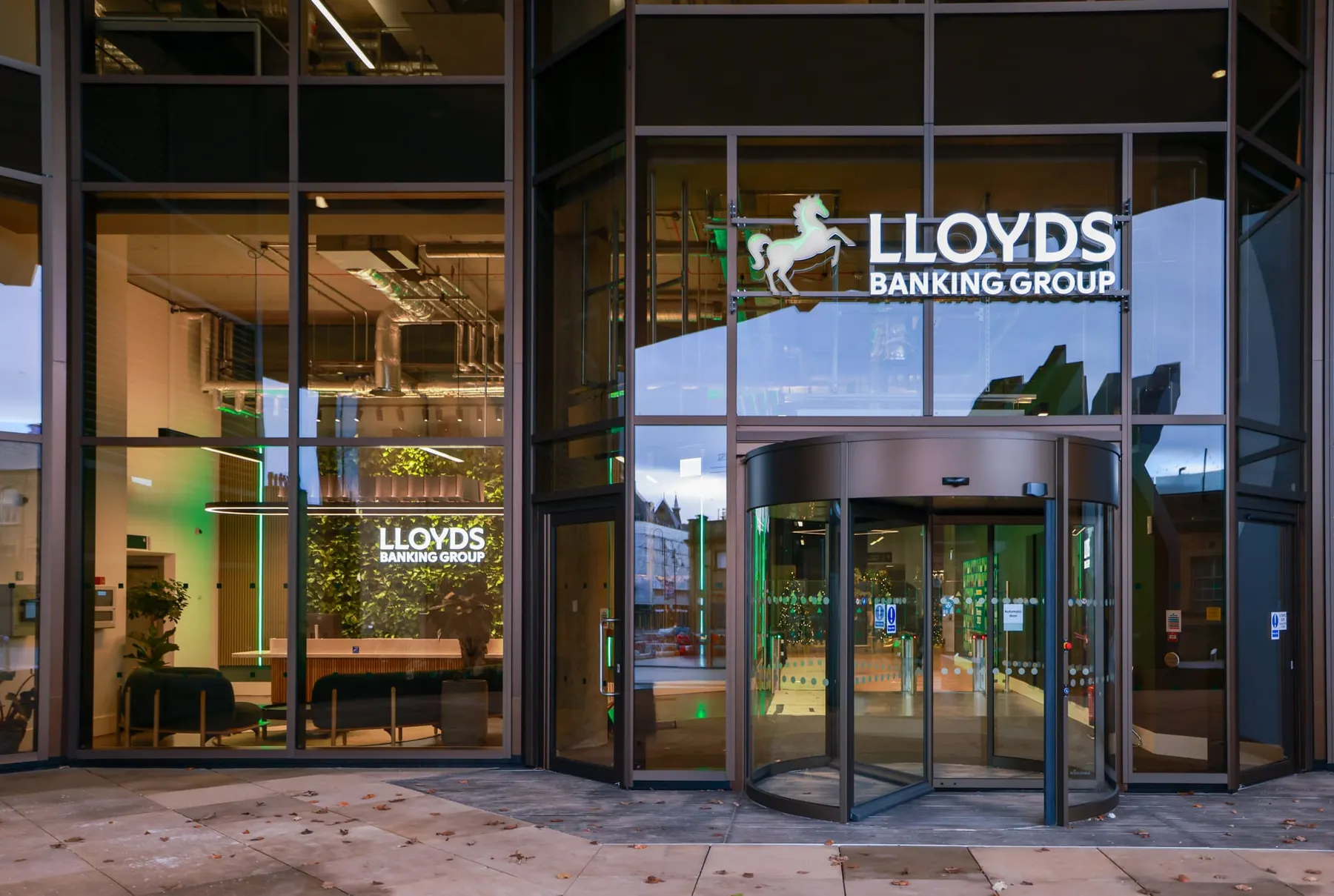
Lloyds loves models: Enterprise tech salespeople have one basic go-to strategy when it comes to pitching their wares; if you don't adopt our newest product based on this exciting emerging technology within the next quarter your company will die and your children will curse your name (lightly paraphrasing). This is, of course, not true, especially given how much of the world's production software still runs on mainframes.
But even the strongest believers in the enduring dependability of legacy technologies must concede at a certain point that those apps are holding them back, either in terms of the capabilities they can provide or in the lack of qualified personnel needed to maintain them. Right now Lloyds Banking Group is getting rid of hundreds of old systems and applications, and it's using coding agents to do it faster than anyone could have imagined, COO Ron van Kemeade said in a recent interview with The Stack.
 Edward Targett
"[Just] half a year ago, if I would have gone in and said, 'guys, we have 200 COBOL applications, let's refactor all of them!'” those employees would have started updating their resumes, van Kemeade said, but after the tech organization started using agents to analyze and rebuild those apps, Lloyds was able to re-factor a pricing application in six months. Right now the company is running both the old and new app in production, and if the performance holds up they'll retire the old app, he said.
Still, even with the incredible progress that software teams have made with coding agents over the last eight months, the best practices around deploying those tools are still evolving. "Your data integrity, your data quality is becoming even more important," van Kemeade said, and he warned companies thinking about following its lead that embracing AI in enterprise IT requires as much cultural change as anything.
Lovely Ofgem, meter maid: Talk about a gold rush: Ofgem has received applications from more than 300 different data-center wannabes asking for, in total, twice as much power as the entire UK consumed last year. It's starting to get the sense that a fair amount of those applications are half-baked, and will now require an application fee of £712,500 ($968,974) for new data-center projects to get in line.
 Edward Targett
Join peers following The Stack on LinkedIn
Bombastic boosts: Palantir's CEO Alex Karp has been pretty vocal recently about frontier labs' cannibalisation of enterprise data for their own model gains. Karp's blatantly self-serving warnings definitely haven't hurt the company's bottom line after it reported US commercial revenue up 150% year-over-year during its Q2 earnings call on Monday.
 Phillip de Wet
Sum up the parts: The UK's Olix just raised $312 million to develop a new type of inference hardware that could help AI companies move past the RAMageddon era. Based on silicon photonic interconnects, the idea is to divide up the work across specialized chips rather than one GPU working with high-bandwidth memory, which could reduce the cost of serving inference.
 Kiera Fields
Straight outta Orlando: In this week's edition of STACKUP, Noah Bovenizer talks to Danny Jenkins, CEO of ThreatLocker, which just raised $190 million in Series F funding. The startup is working on bringing the zero-trust security model to AI applications, where agents will have to be detected and validated without disrupting human users.
 Noah Bovenizer
Harness training: Microsoft CEO Satya Nadella spent a decent amount of his time with financial analysts last week talking about the need for enterprise companies to separate the AI models they use from the "harness" they use to manage the interactions between their data and those models. Ed Targett unpacked the evolution of this crucial space in enterprise AI, and wondered if specialized inference platforms might win in the end.
 Edward Targett
Patching stations: Admins rushed to plug a vulnerability in N-Central over the weekend and into Monday that was being actively exploited to allow control over an important monitoring tool for many service providers. According to Huntress as of late Monday only 13.6% of N-Central servers remained unpatched, down from 55% earlier in the day.
 Edward Targett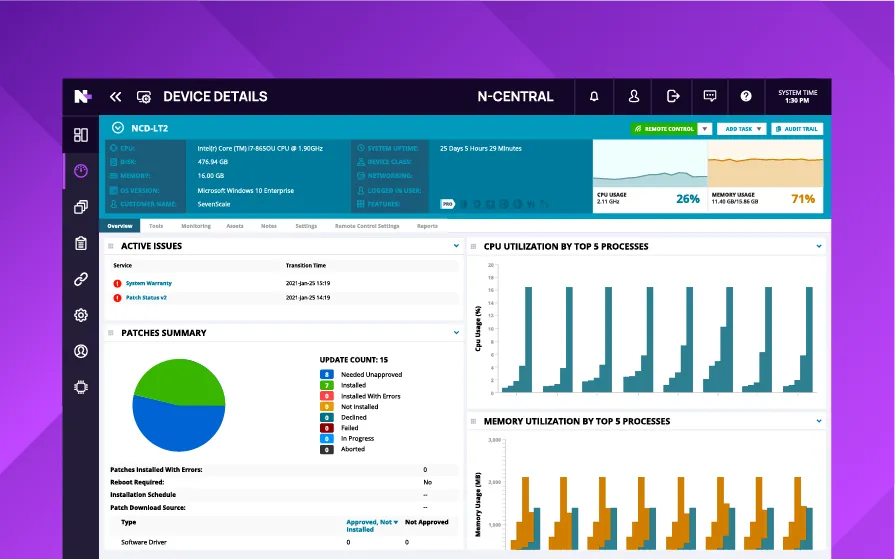
We're also reading:
Tailscale co-founder and CEO Avery Pennarun explained how Tailscale let down Hugging Face as OpenAI's agents hacked into its systems, which is theoretically the kind of thing Tailscale is used to detect.
Mad scientist Steve Yegge is now working on a new agent harness called Wheelhouse after his previous system for automating software development, Gas Town, stopped working following the release of Anthropic's Opus 4.7.
We're convening in London on November 4-5, for a series of exclusive workshops and fireside conversations on the rise of BYOC as a favoured enterprise SaaS deployment model; how many CDOs are consolidating their data estates with Apache Iceberg; how CISOs at FTSE 100 scale are handling supply chain risk (with GSK's CISO) and more.
Ticket applications are subject to pre-vetting. Get in touch with ed@thestack.technology if you want to be in the room.