

Welcome to Runtime! Today on Product Saturday: If you've been thinking about ditching VMware, Microsoft has a new migration tool to consider, Google drops a new mid-range coding model, and more.
Please forward this email to a friend or colleague! If it was forwarded to you, sign up here to get Runtime for free every week, or level up here.
Ship it
Chain reaction: The playbook was always clear after Broadcom finalized its deal to acquire VMware in 2022: just like it has done many, many times before with its purchases, Broadcom hiked prices and forced VMware customers into awkward bundles while paying lip service to modernizing the product in line with industry trends. And ever since, VMware customers have been looking for alternatives from basically every enterprise platform vendor that can offer them a path forward into the future.
Microsoft threw a new service into that mix this week at Ignite after making Azure Catalyst generally available. It's the crossover event of the enterprise season, piecing together elements from Azure and GitHub to help companies modernize their application footprints with a little help from, you guessed it, AI.
VMware customers are definitely a target for Catalyst, according to Microsoft's Jeremy Winter, chief product officer and corporate vice president for Azure Core, but the service isn't confined to that. "One of the key pieces that we can help with, we see a lot of people wanting to move from traditional databases to PostgreSQL," he said, referencing the extremely popular open-source database.
And Catalyst is a free service, Winter said, given that Microsoft — like all cloud providers — is willing to bend over backwards to get your workloads into the cloud. "The goal is to keep this as low cost as possible, just for you to go assess and modernize your environment," he said.
Delivery, continued
Starstruck: It might have been Anthropic's week to shine, but bitter rival OpenAI tried its best to steal a little bit of thunder from the biggest IPO anyone has ever seen. This week the company launched GPT-6.2-Astra, its newest flagship model that it hopes will grease the skids for its own enormous IPO at some point next year.
"GPT‑6.2 Astra sets a new quality bar for AI in complex professional work," OpenAI said in a blog post. The company also dropped a new version of its lower-cost Sol model family, which "is smarter, more efficient, and lets you complete more tasks on the same paid plan" compared to its predecessor, according to the company.
Cooking with gas: Google Cloud's integrated AI stack strategy has some admirers across its fellow hyperscalers, as shown by Microsoft's launch of a suite of new AI models this week and AWS is likely to follow suit in two weeks at re:invent 2026. This week the third place cloud infrastructure provider — which is growing at eye-popping rates this year — introduced a new version of Gemini Neon, which was designed for coding tasks.
"Neon is built for complex coding, analytical reasoning, and production-grade enterprise workflows," Google said in a blog post, noting that its Carbon model is still your best bet for the most demanding tasks. But Neon is significantly more affordable than Carbon, and it's also priced below the top-tier models from the frontier labs.
Reviewing stand: As Microsoft's Jay Parikh told The Stack earlier this week, the major challenge for enterprises now that coding agents are well established is managing all the code that those agents spit out. Pulumi has been working on advancing the infrastructure-as-code service business for the last several years, and this week rolled out two new services that carry that concept forward into delivery and observability.
"Pulumi Delivery puts your entire release process in code: stages, promotion and rollout policies, gates, jobs, and everything else between merge and production," while Pulumi Agents can "monitor your running systems, react to events from PagerDuty, Datadog, Sentry, and Honeycomb, or run on a schedule," the company said in a blog post. Defining those parts of the software life cycle as code helps agents move more quickly and accurately given that agents understand code better than the human-oriented practices of the past, full of one-off scripts and custom YAML files, it argued.
The rest of The Stack
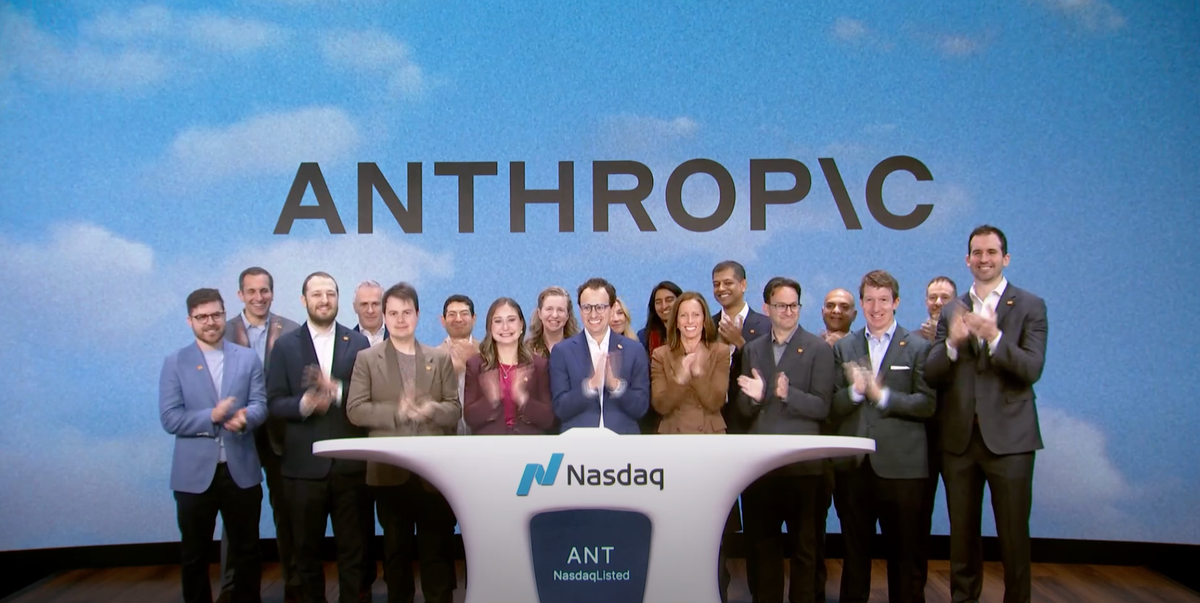
Strikes and gutters: Anthropic's second day of trading on the Nasdaq Friday did not go as well as its first, which saw the price of the company's stock jump 17% from its offering price. That's probably how it will go for Anthropic over the next several months, as it assumes its place among the bellwethers of the AI economy.
 Tom Krazit
Little help?: Broadcom released a patch for a critical vulnerability in VMware Thursday, but did not tell customers that the flaw has been exploited by attackers for months. It fell to Mandiant to make that connection, which is just another selling point for migration services like Azure Catalyst.
 Edward Targett

Aye aye, skip: As companies deploy agents, they'd like them to tackle long-running tasks but one misfire can bring the entire operation to a halt. Airbnb just released its internal solution for that problem, dubbed Skipper, under an open-source license.
 Edward Targett

Software, not people: In part two of a series on the changes that AI agents are forcing technology leaders to make on the fly, OpenStack co-founder Rick Clark argued that thinking of agents as drop-in replacement for job roles isn't going to work. "Somewhere in the last fifteen years the way we build software stopped being a practice and became a religion," he wrote.
 Rick Clark

We're also reading:
Three breaches, endless leaks: Your AI supply chain needs canaries: Dragos Chief Research Officer HD Moore on the results of a sobering investigation into the security of AI inference providers, and they're not good.
The RedMonk Agent Activity Index, Q3 2026: New research from RedMonk shows that Anthropic's Claude Code is still the most widely used AI coding agent, and it's still growing.
Thanks for reading — see you Tuesday!