

Welcome to Runtime! Today on Product Saturday: TypeSafe thinks it has come up with a cheaper way to automate business processes, Rubrik joins the "we've got Mythos and you don't" club, and more.
Please forward this email to a friend or colleague! If it was forwarded to you, sign up here to get Runtime for free every week, or level up here.
Ship it
Smart brevity: Large-language models have had an incredible impact on enterprise tech over the past year, thanks to improvements that introduced coding agents to the developer masses and started to fulfill the promise of business-computing agents in general. But the downsides are well documented at this point: they're expensive, still prone to hallucinations and errors, and they still need a human to verify their output when used in production.
TypeSafe, founded by former OpenAI engineer Diogo Almeida, released its first product this week after two years in stealth mode, and it promises to solve some of those issues. Jev is the first model in the System One series, and it was designed "to make fast, structured decisions that software can use directly," Almeida said in a blog post.
"Think of Jev as a frontier-intelligence function call: unstructured state in, typed probabilistic decisions out," Almeida wrote. LLMs were designed to absorb natural-language input and produce text output that people could easily understand, but agents don't need to access the full corpus of illicitly gained knowledge held in LLMs; they just need "type-safe structured values" that were defined in advance by the developer, which prevents errors from derailing the application.
This process, which TypeSafe is calling "Reinforcement Learning for Calibrated Decisions," does require developers to do a fair amount of work up front setting up the structure compared to the point-and-shoot nature of LLM prompting. However, Jev is cheap as hell: TypeSafe is charging $0.042 per million input tokens, and nothing for output tokens, which according to the company are "too cheap to meter."
The Stack Summit: We're convening in London on November 4-5, for a series of exclusive workshops and fireside conversations on the rise of BYOC as a favoured enterprise SaaS deployment model; how many CDOs are consolidating their data estates with Apache Iceberg; how CISOs at FTSE 100 scale are handling supply chain risk (with GSK's CISO) and more.
Ticket applications are subject to pre-vetting. Get in touch with ed@thestack.technology if you want to be in the room.
Delivery, continued
Unevenly distributed: While reasonable people can disagree about the probability of AI models ending life on Earth as we know it, there's no question that when it comes to both offensive and defensive cybersecurity tasks, we've never seen anything quite like Anthropic's Mythos and OpenAI's GPT-5.6-Cyber models. But worries about their capabilities have created a dual-class cybersecurity landscape in which only vetted providers have full access to the latest models, and this week Rubrik became the latest company to take advantage of that exclusive access with the introduction of a new red-team service.
Rubrik Code Guardian is "a custom Claude Mythos 5 harness that red-teams customers’ code based on an air-gapped copy of their repository," Rubrik said in a press release. It was designed to find "multi-step vulnerability chains an attacker would actually exploit, validates each for exploitability, and turns confirmed critical issues into tracked remediation," which certainly could have helped OpenAI prevent the Hacktron intrusion.
On-prem for them: When the generative AI boom kicked off there was a lot of talk about how companies might prefer to run their AI on their own servers, in order to keep tighter control of their data and their costs. Judging by the earnings results of the cloud providers lately, it doesn't seem like that movement really took off, but this week at Splunk.Conf Cisco introduced new tools for companies that want to keep things in house.
The Cisco AI POD for Splunk "brings Splunk AI to on-premises customers with new AI runtime software, Cisco infrastructure, NVIDIA accelerated computing, and Kubernetes-based architecture – pre-validated and optimized for Splunk AI workloads," the company said in a press release. Splunk also added support for "tokenomics" to its on-premises observability software to help customers keep an eye on the bill.
K8s on skates: As the second-most widely used open-source project in the world, Kuberentes is going to host a lot of AI infrstructure over the next decade, even though it wasn't designed with any of those workloads in mind. This week Stacklok — run by Kubernetes creators Craig McLuckie and Joe Beda — introduced Mecatl, a new open-source project that aims to fill some of those gaps.
Mecatl is "cloud-native harness," or "an advanced agent system built from the ground up for Kubernetes," Beda said in a blog post. Most harnesses were built for solo developers working on their own machines, but Mecatl was designed to run in the cloud, where "session storage, tools, filesystems, and sandboxing can be deployed, scaled, and secured independently," he wrote.
The rest of The Stack
You down with MCP?: When we look back on the history of the AI boom in five years — assuming we're not all dead — the maturation of MCP might be one of the most important catalysts that took agentic AI from hype to reality. Noah Bovenizer stopped in at the first MCPCon in Europe this week to take the pulse of the protocol, which still needs to improve its messaging and identity-management technology.
 Noah Bovenizer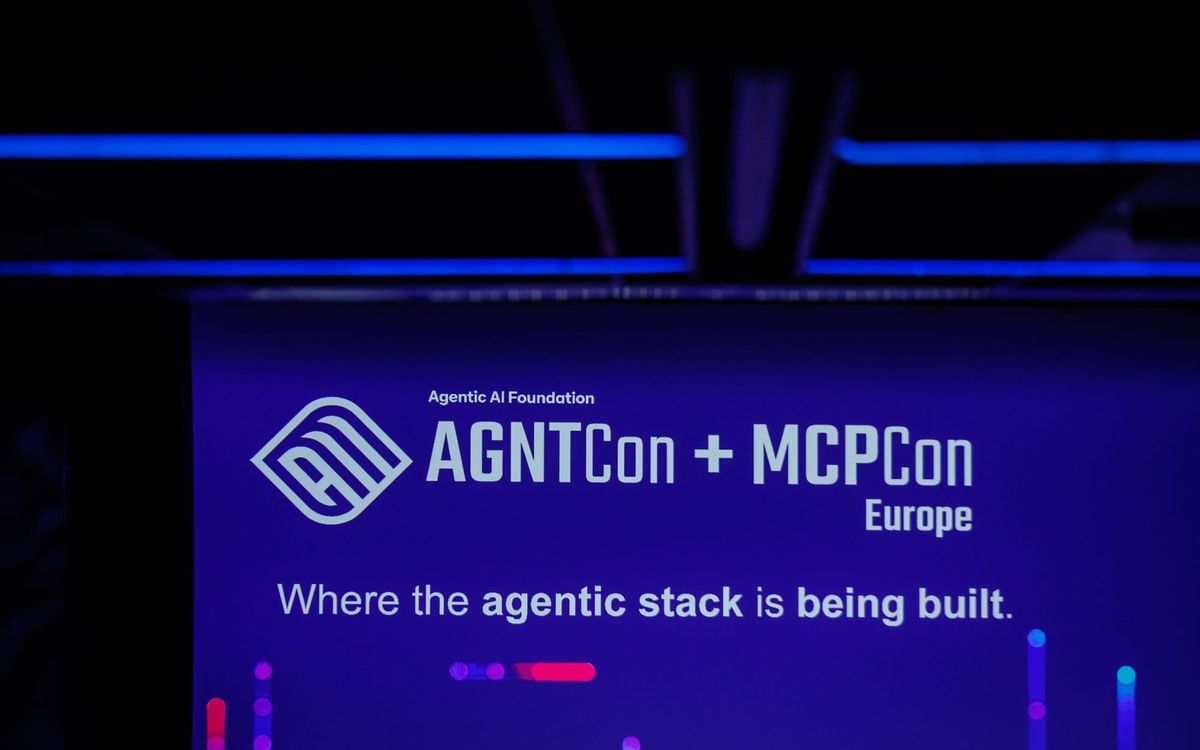
The "S" in OpenAI stands for security: WIth apologies to Elena Cross, perhaps the most important thing we've learned about OpenAI this year is that its security operation needs a lot of improvement. Researchers from Hacktron revealed Thursday that they were able to use Anthropic's Claude Opus 5 to hack into OpenAI's GitHub repository, which is the definition of adding insult to injury.
 Tom Krazit
Quote of the week
"We have a great track record of doing it. The internet works. The DNS root zone has never stopped working. I think everyone shares that common goal: no matter what happens, the shared common global resource of the root zone needs to function correctly." — IANA head Kim Davies, explaining to The Stack why the arcane DNS root key signing process is so important, and why it's about to go through a big change in October.
We're also reading:
What Policymakers and the Public Need to Know About the Cult of AI: When the going gets weird, the weird turn pro.
I don't like LLMs: Software development legend Martin Fowler gets a few things off his chest about the current era of AI software.
Thanks for reading — see you Tuesday!