

Welcome to Runtime! Today: HSBC Group CTO Mario Shamtani explains why nurturing a mainframe stack involves a lot of tricky choices, what's behind a bizarre hack of French supermarket systems, and more.
Please forward this email to a friend or colleague! If it was forwarded to you, sign up here to get Runtime for free every week, or level up here.
First up: Staying power
For every enterprise enthusiastically embracing coding agents and picking out harnesses like a jockey at the track, there are countless others that are content to nurse an aging tech stack that may not get any links on Hacker News but works, day in, day out. As Europe's second-largest bank, with more than $3 trillion in assets under management, HSBC knows it has to keep up with the times but is confident enough to keep the FOMO at bay.
"Mainframes have a purpose in terms of large… transactions. They're also cheaper to run [but] harder to change… they're tightly coupled, and therefore when you make a change, you have to understand what that affects,” said HSBC Group CTO Mario Shamtani in an exclusive interview with The Stack describing the tech that runs the 160-year-old bank. At one point the company thought it could move faster to erase its dependence on technology first popularized in the late 1950s, but soon realized that an incremental approach was a much more stable way to move forward.
 Edward Targett
No company is more closely linked with the mainframe than IBM, but Shamtani suggested that while it is content to keep cashing those support checks, Big Blue can see the writing on the wall. "If you’ve got something on an operating system that was modern 40 years ago, it's very hard to keep people around that want to work on that. Even if you're IBM," he said.
And enterprise AI's need for clean, well-organized data means that Shamtani needs to spend much of his time on what he actually considers to be HSBC's most pressing tech challenge. "Probably the most difficult is data, I would say, because it touches every aspect of the bank… everything gets boiled down to a data problem."
The rest of The Stack
From froid to chaud: Hundreds of supermarkets in France were hit with a mysterious cyberattack Monday that targeted HVAC systems and turned up the temperature, spoiling food stores across the country. "Industrial control systems are often assumed to be safely tucked away on isolated networks. Unfortunately that assumption doesn't always hold true,” security researcher Claroity noted.
 Edward Targett
Share alike: As companies roll out applications based around AI models served by a provider, who is responsible when something goes wrong? The cloud-era "shared responsibility" model is one blueprint for moving forward, but so far it seems like AI apps are going to evolve a little differently.
 Sean Michael Kerner
Chips in: Microsoft took a little more time to roll out a custom silicon strategy compared to its hyperscaler counterparts, but it's starting to catch up. It announced a new generation of its Maia GPU on Monday and pledged to make it the primary engine for its AI inference services going forward.
 Noah Bovenizer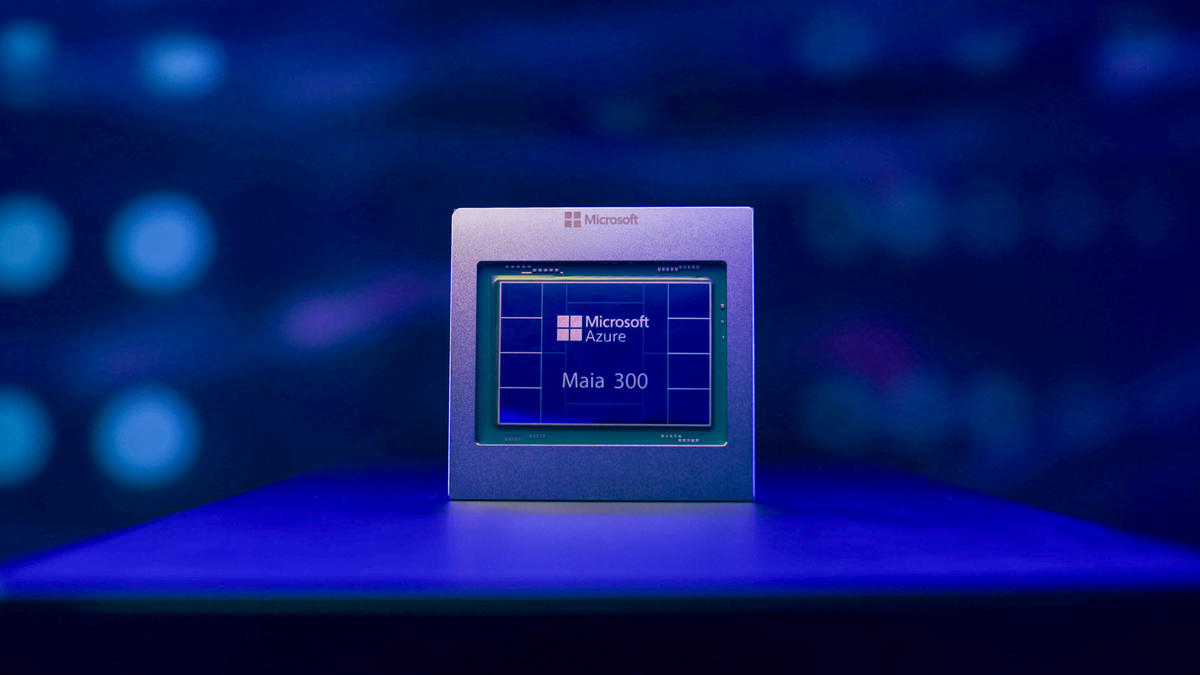
Quantum leap: Quantum computing — which has been five years away from making a big impact for like 20 years — has nonetheless drawn lots of investment given its potential to reinvent computing as we know it. In this week's STACKUP, Noah Bovenizer (to whom The Stack will sadly bid farewell and bon voyage on Friday) talked to Universal Quantum's Ilan Elson in the wake of its $100 million Series A funding round to build a trapped-ion qubit.
 Noah Bovenizer
Stack ranking — Enterprise moves
Erik Iverson is the new chief revenue officer at Asylon, joining the enterprise robotics company after similar sales leadership roles at Belcan and Cognizant.
Matt Camassa is the new chief revenue officer at Azul, joining the enterprise Java company following sales leadership roles at Sift and TeleSign.
Bikash Koley is the new chief product and technology officer at Crux AI, joining the AI infrastructure company after nearly seven years in technology leadership roles at Google.
We're also reading:
How to effectively debug when you no longer understand the code: Cindy Sridharan is always worth reading, and especially so in this essay about post-agent software development process.
Harness Learning Enables Generalizable Test-Time Adaptation: You've heard about AI models and you've heard about harnesses, but what if AI models could improve harnesses through reinforcement learning?
Thanks for reading — see you Thursday!