
Welcome to Runtime! Today: OpenAI's latest acquisition shows how determined it is to play a central role in enterprise software development, a Railway employee goes on an unsanctioned (?) hacking adventure, and more.
Please forward this email to a friend or colleague! If it was forwarded to you, sign up here to get Runtime for free every week, or level up here.
First up: Robbing Pierre to pay Paul
OpenAI signaled its intentions to shift from a consumer-oriented AI company to an enterprise-oriented AI company a little over a year ago at its annual Demo Day and has made significant progress after mostly ceding the market to rival Anthropic during the early days of the generative AI boom. President Greg Brockman told The Wall Street Journal Wednesday that while OpenAI struggled to make that transition at the beginning of 2026, by the third quarter enterprise revenue surpassed consumer revenue for the first time.
The launch of new models focused on coding and cybersecurity paved the way, as did the warm developer reception for its Codex coding agent, but long-term enterprise growth will require OpenAI to support clients with several different products that work well together. The acquisition of Pierre Computer, announced Wednesday, could tempt enterprises to give it more business by addressing one of their biggest pain points of 2026: GitHub reliability.
 Yaël Bizouati-Kennedy
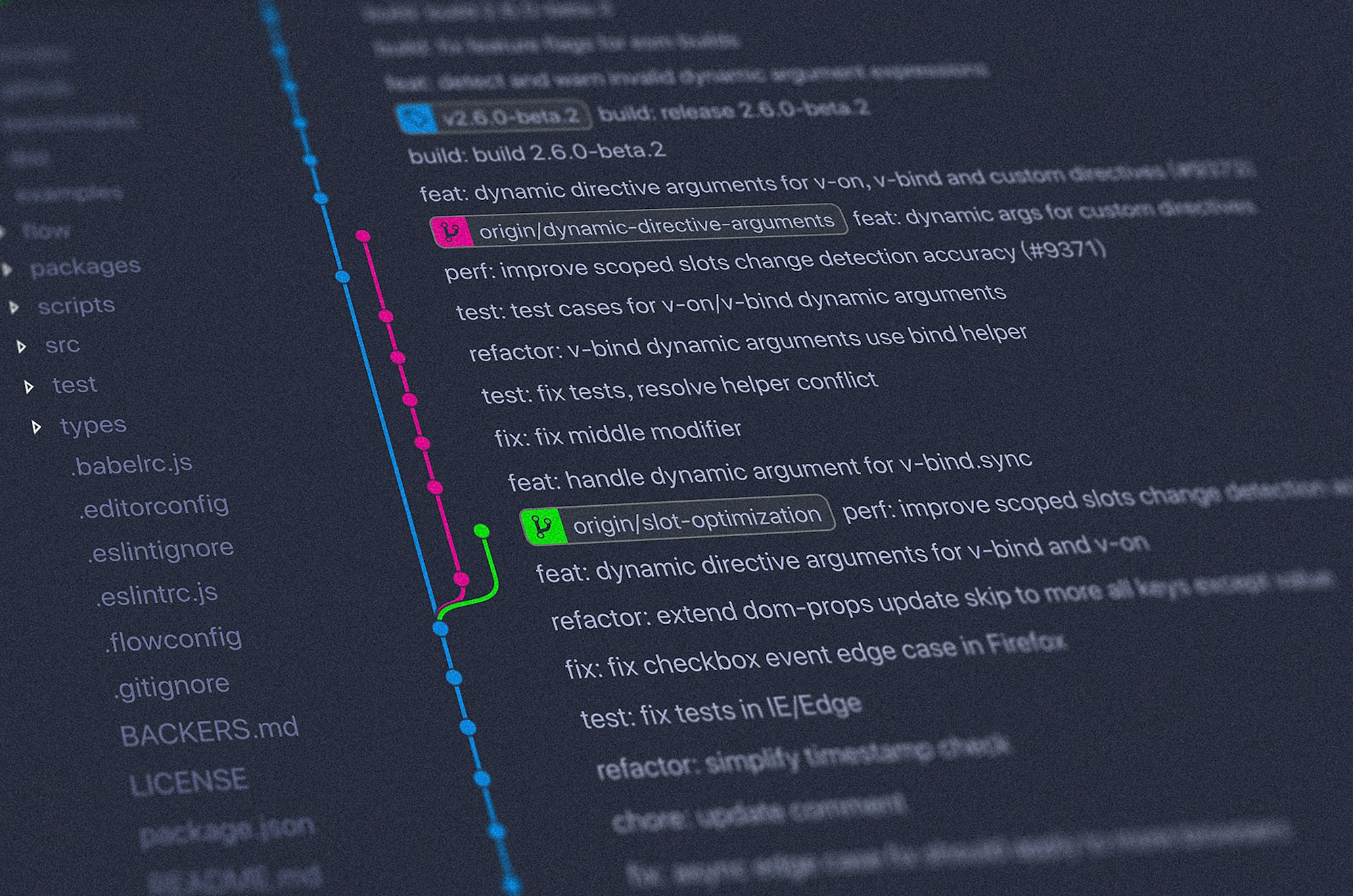
Pierre (which has a delightful lo-fi 80s-chic web site) operates a service called Code Storage, which was designed to "store [customers'] generated code, memory files, design artifacts, legal documents, and other product files and resources that change over time." That sounds a lot like GitHub, and Pierre's tools are already part of OpenAI's enterprise experience: "If you’ve browsed files or reviewed a change in the Codex app, you’ve already used Pierre’s Trees and Diffs libraries," it said in a blog post announcing the deal.
GitHub seems to have done a better job simply staying online over the last month or so after a series of devastating outages this year forced companies to consider alternatives to keep their software development process flowing, but dealing with AI generated code might require a more modern approach to code management. That's what former GitHub CEO Thomas Dohmke hopes to accomplish over at Entire, and if OpenAI can convince enterprises to trust it with their code (no small feat) it could unlock another source of enterprise revenue.
The rest of The Stack
It's coming Home: The UK Home Office issued notices last week for a noticeable expansion of its compute contract with AWS that could see the agency spend nearly £882 million ($1.2 billion) over four years starting in December 2027. This year it's expected to spend about £88.3 million with the cloud infrastructure leader, which indicates that it has big plans.
 Tom Krazit

Off the rails: Will companies ever be held responsible for hacking into other companies with poorly maintained or supervised AI agents, especially if a competitor is involved? An ongoing saga between Railway and PrimCloud might help establish some clarity around the issue.
 Iain Thomson

That dog won't hunt: Datadog has enjoyed strong demand for its observability tools over the last year as companies struggle to understand what their agents are actually doing, but that momentum looks set to plateau in the fourth quarter, company executives said Wednesday. "“A year ago, nobody had the amount they spend in their budgets on AI. So, everybody had to try and figure out what works and what part of that they actually need and what they get from that,” co-founder and CEO Olivier Pomel told investors Wednesday.
 Yaël Bizouati-Kennedy

AMD draws a circle: Nvidia has taken a fair amount of heat for so-called "circular financing" deals where it invests in customers who just happen to need funding to buy GPUs, but AMD also plans to get in on that action. "I think that's the right thing to do to ensure that we are jointly ensuring that there's the right infrastructure as our new chips become available," AMD CEO Lisa Su said this week following a stellar earnings report.
 The Stack

Stacked up — The week ahead
Web Summit returns to Lisbon starting Monday and running through the week, and The Stack's Kiera Fields will be onsite covering the event.
KubeCon North America returns to Salt Lake City starting Monday and running through the week, full of updates and sessions on the world's second-most widely used open-source project.
CoreWeave is expected to report earnings on Tuesday in what will be a closely watched sign of the health of the neocloud sector; analysts expect revenue of $3.5 billion, which would be a 160% jump, and losses per share of $1.55, which would be a big move in the opposite direction.
Forbes CIO Summit hits New York on Wednesday, with CIOs from Vanguard, FedEx, and the NFL expected to attend.
The Cerebral Valley AI Summit takes place in San Francisco on Thursday, featuring speakers such as Databricks CEO Ali Ghodsi, Palo Alto Networks CEO Nikesh Arora, and Fireworks AI CEO Lin Qiao.
We're also reading:
A proposal: how to hire junior engineers in the age of AI: Arize's Laurie Voss tackles another topic that's reverberating around tech circles this year now that agents have finally arrived to do all the grunt work younger engineers used to do to learn the trade.
The Making of Dario Amodei: The New York Times goes deep on the Anthropic co-founder and CEO.
Thanks for reading — see you Saturday!