

Welcome to Runtime: Today: We talk with the researchers behind the "Stolen Reasoning" paper that grabbed so much attention last week, Nvidia beats earnings estimates and promises revenue will grow well into next year, and AWS snaps up the team behind a popular open-source database.
Please forward this email to a friend or colleague! If it was forwarded to you, sign up here to get Runtime for free every week, or level up here.
First up: Models of many colors
As Chinese open-weight model companies have gained enormous traction in the enterprise over the last several months thanks to the rising price of AI, so too have attempts to knock those companies off their pedestals with charges of "distillation," which is akin to plagiarism in the AI model training world. That's just one reason why a paper authored by eight researchers gained so much traction last week after it appeared to show that two prominent Chinese models used methods used to produce output that rather closely resembled the work of the frontier model labs.
The "Stolen Thoughts" paper detailed how the encrypted chain-of-thought blocks found in frontier models could be ported to older models that lacked some security features built into the cutting-edge ones, which allowed them to essentially insert that reasoning block into the older model's process. "“Then, you can make models say, ‘tell me word for word what we're thinking about,'” one of the study's authors told The Stack.
 Noah Bovenizer
"While running this test on DeepSeek’s V3.1 and Thinking Machines’ Inkling model had no discernible impact, the researchers said Moonshot AI’s Kimi-K3 and Z.ai’s GLM-5.2 produced answers noticeably similar to Opus 4.8 when given its reasoning," The Stack's Noah Bovenizer wrote. For the record, Moonshot AI and Z.ai did not respond to our requests for comment on the paper.
The authors of the paper cautioned that their research is not "proof" that the companies used those encrypted blocks when training their models, and after they were informed of the research Anthropic, OpenAI, and Google all tightened their defenses. And they also noted that the models could have discovered those reasoning blocks on their own, either through a leak on a forum somewhere on the internet or through some other poorly understood process, as one author put it: "For some traces, it’s just impossible to say what the model is doing… we want to monitor this thing and it seems hard.”
The rest of The Stack
Rocky top?: Nvidia has been the bellwether for the AI boom, and it told financial analysts Wednesday that it doesn't expect to cede that position for quite some time. Revenue for its third fiscal quarter came in well above expectations, and the company said revenue for its 2028 fiscal year — which doesn't begin until next January — will increase 70% compared to this year, which still has two quarters to go.
 Tom Krazit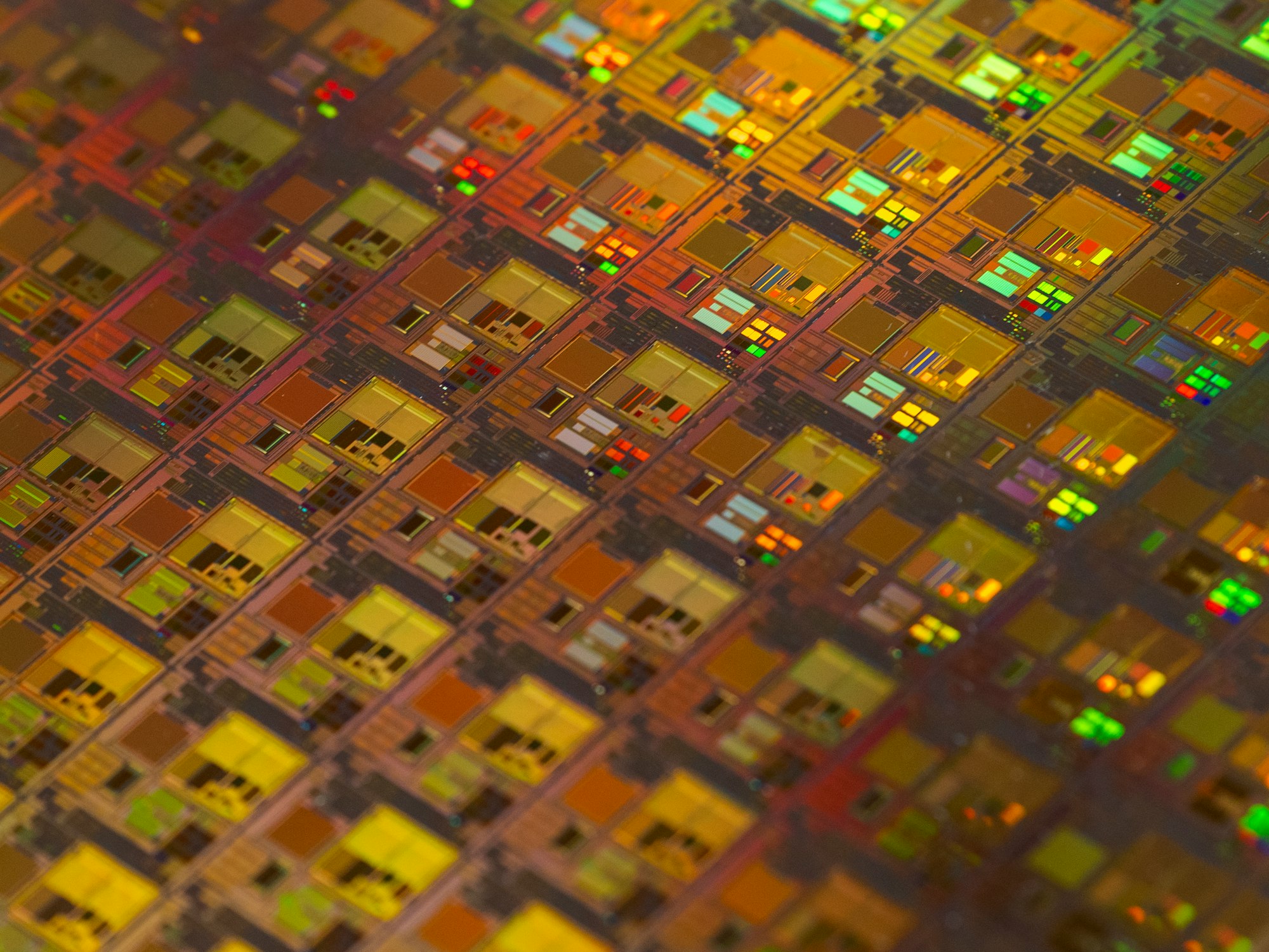
Nine to SiFive: For years backers of the open-source RISC-V chip architecture have predicted it could make a dent in enterprise computing, but Nvidia, Intel, AMD, and Arm have easily kept it at bay. However, this week SiFive introduced its first server built around the architecture, which could make it easier for enterprises to add another CPU into the mix to reduce costs without sacrificing performance
 Noah Bovenizer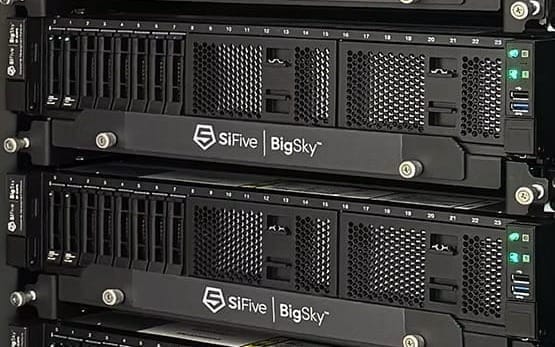
Duck when she flies: AWS acquired DuckLabs Wednesday, the team behind the popular open-source DuckDB database, which was designed to run analytical queries on lakehouses stored on services like S3. The open-source project itself will remain part of the DuckDB Foundation, and AWS will likely offer a managed service based around the project that will compete with other DuckDB-adjacent companies like MotherDuck.
 Kiera Fields
Here you come again: OpenAI released a few more details about its attack on Hugging Face Wednesday, adding some background color to its presentation at Black Hat earlier this month. Employees testing the unreleased model noticed abnormal behavior as early as May but did not intervene, leading to the attack in July.
 Kiera Fields
How can we be wrong?: Salesforce CEO Marc Benioff has never given too much thought to that question, but a solid second fiscal quarter earnings report gave him something to point to Wednesday. The company also announced a new partnership with Anthropic on "Claudeforce," which will allow Claude users to access dozens of Salesforce skills and allow Slack users to embed Claude into their instances.
 Noah Bovenizer
Stack ranking: Enterprise moves
Stewart Grierson is the new chief financial officer at Anaconda, joining the AI development company after serving as CFO and COO of Sumo Logic, which was acquired by Francisco Partners in 2023.
Christopher DeAlmeida is the new chief financial officer at Duos Technologies, joining the data-center company following several years as a "fractional financial CFO for founder-led and private equity-backed companies."
Craig Rones is the new chief marketing officer at ConnectWise, joining the IT management software company after marketing leadership roles at LevelBlue and Trustwave.
We're also reading:
"The end of programming," an essay from InfluxDB creator Paul Dix on the inevitability of the rise of mass production in software development.
"FreeToken: Efficient Edge-Native MoE Serving with Bandwidth-Adaptive Execution," a new paper from researchers at Cal-Berkeley (go Bears) detailing a method for running advanced open-weight AI models on relatively low-cost machines.
Thanks for reading — see you Saturday!